Lesson 1. Introduction to News Literacy
Section outline
-
-
Definition and Scope of News Literacy
News literacy is the ability to critically analyze news sources, identify biases, and evaluate the accuracy of information. With the explosion of digital and social media, news now reaches audiences instantly, but this rapid sharing can sometimes compromise the quality and reliability of information. News literacy helps people discern credible sources from unreliable ones, allowing them to understand what factors make a source trustworthy.
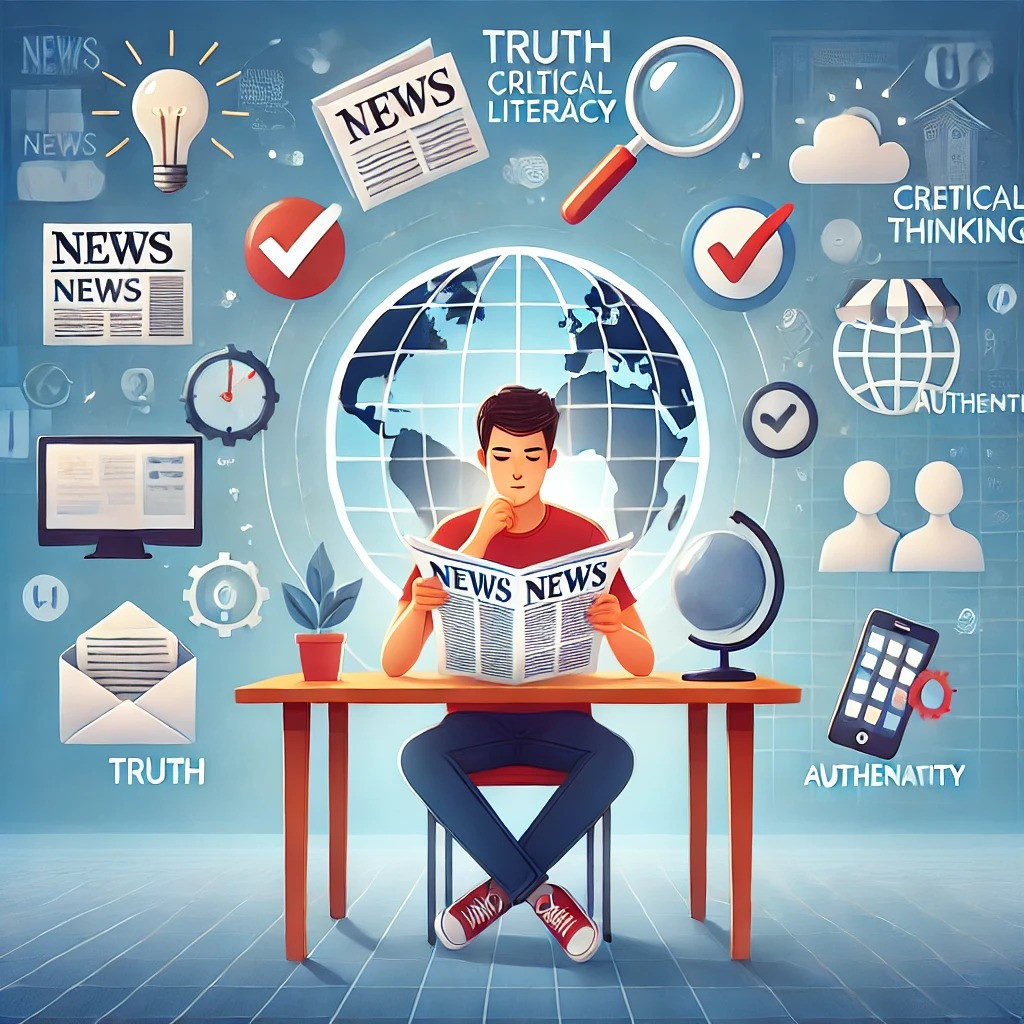 News literacy in fact goes beyond simple fact-checking. It requires recognizing different types of news content, including hard news, editorials, opinion pieces, and sponsored content. Understanding these distinctions is essential, as each type serves a unique purpose. For instance, opinion articles provide a specific viewpoint and are meant to spark debate, whereas hard news is typically designed to deliver factual information without personal bias.
Moreover, news literacy encourages readers to examine the motives behind news stories. Is a piece intended to inform, convince, or entertain? Are there political, commercial, or ideological motivations at play? Recognizing these underlying factors allows consumers to better assess whether the information they’re receiving is complete, accurate, and balanced.
The Role of News in Society
News plays a foundational role in shaping public understanding and democratic engagement. Its primary function is to keep citizens informed about events and issues that impact their lives, from local happenings to international developments. News offers context for decisions on civic and personal matters, like voting, healthcare, and public policy, giving individuals the information they need to act thoughtfully and responsibly.
In democratic societies, news serves as a tool for accountability. By reporting on government actions, corporate practices, and social issues, journalists hold powerful institutions to account. Investigative journalism, for example, has uncovered major scandals, corruption, and wrongdoing, empowering the public to demand change and justice. Without news, many issues affecting public welfare might go unnoticed, leaving power unchecked and reducing transparency.
News also fosters social cohesion by connecting communities with shared information. When people engage with news, they share common knowledge, which promotes mutual understanding and empathy within society. This collective knowledge is essential for democratic discourse, where differing viewpoints come together to shape policies and influence the public agenda. However, it's worth noting that in today’s media landscape, news can also polarize if it’s delivered in a biased or divisive manner, highlighting the need for a well-rounded, critical approach to media consumption.
Why News Literacy Matters
In today’s media landscape, the need for news literacy is more pressing than ever. The internet has democratized information, making it possible for virtually anyone to produce and share content. While this has made information more accessible, it has also created an environment where misinformation, propaganda, and sensationalism can thrive. This “information overload” makes it challenging to distinguish credible information from falsehoods or biased narratives.
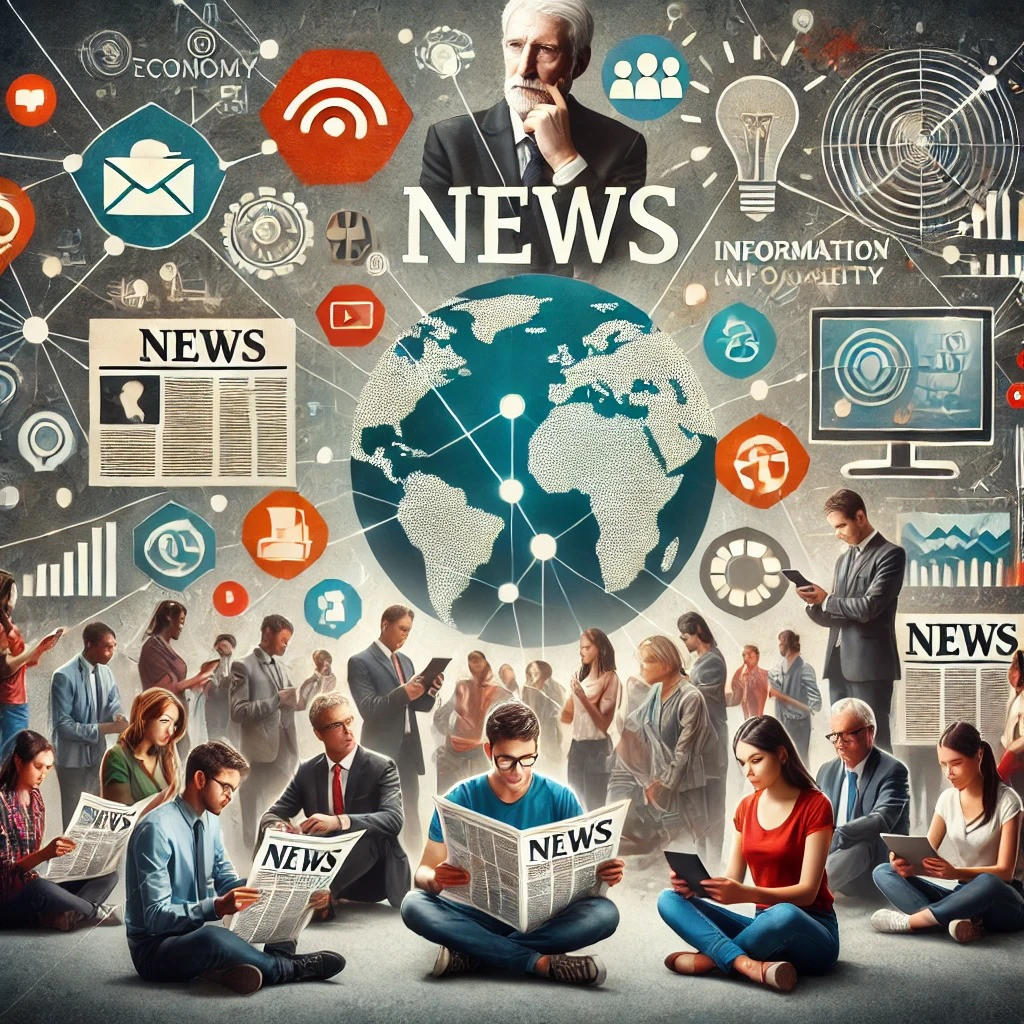 Misinformation and “fake news” are serious concerns. Misleading information spreads rapidly, especially on social media platforms, often fueling fear, anger, and confusion. False information around critical issues, such as public health, elections, and climate change, can lead to real-world consequences, affecting how people make decisions and respond to events. For instance, during the COVID-19 pandemic, misinformation about the virus and vaccines led to confusion, hesitancy, and, in some cases, detrimental health outcomes.
News literacy equips individuals to recognize and challenge such false narratives. This involves asking questions like: Who created this content? What is their motive? Is this information verified by credible sources?
By fostering these critical thinking skills, news literacy empowers people to make informed decisions based on reliable information rather than falling victim to misinformation.Furthermore, news literacy cultivates responsible media consumption. Consumers learn not only to identify reliable sources but also to understand the ethical responsibilities associated with sharing information. Being media literate means recognizing one’s role in preventing the spread of misinformation. For instance, before sharing an article, one should consider whether it comes from a credible source and verify the information. This practice of self-regulation is essential in maintaining a well-informed society and reducing the negative impact of misinformation on public opinion.
Practical Applications of News Literacy
As further illustration, here are some practical steps to apply news literacy skills in everyday life:
Source Verification: Always check the origin of a news story. Reliable sources generally have a reputation for accuracy and professionalism, such as established newspapers, research institutions, and verified experts. News sites with questionable reputations or biased agendas are less likely to be reliable.
Cross-Referencing: Don’t rely on a single source for news on major topics. Cross-check information with other reputable outlets to confirm its validity. Diverse sources provide a fuller picture, especially on complex issues.
Understanding Biases: Recognize that all media outlets, even reputable ones, may have biases based on their editorial stances or target audience. Being aware of these biases can help you interpret information more objectively. Reading across a range of sources with different perspectives can also help mitigate individual biases.
Fact-Checking Tools: Use fact-checking websites. Facts that you read about on social media can easily be checked by using Google Fact Check or by consulting the website of the International Fact Checking Network at Poynter. Videos can easily be identified and checked by using the YouTube Data Viewer. You can also use Google Lens to take a picture with your phone and find useful information by googling your photo) or you can check your information at local fact-checking organizations or websites to verify questionable claims. These platforms are designed to examine the validity of widely circulated stories and claims.
Mindful Sharing: Before sharing information on social media, take a moment to verify its credibility. Thoughtful sharing helps reduce the spread of misinformation and creates a more informed online community.
 As we navigate an increasingly complex media landscape, news literacy has become now a vital skill. It enables individuals not only to discern the quality and reliability of news but also to recognize the powerful role that news plays in shaping society and public opinion. By cultivating these skills, learners can approach media with a more critical eye, helping them become responsible consumers and contributors to an informed, democratic society.
 -
Please find here power point presentation for the Lesson 1, entitled News Literacy: Navigating the Information Age.
-
- An Overview of Media Literacy (EU, 2008) – summarises some general trends in media literacy in the EU over recent decades.
- Grunwald Declaration on Media and Information Literacy in the Digital Era – issued unanimously by the representatives of 19 nations at UNESCO’s 1982 International Symposium on Media Education at Grunwald, Federal Republic of Germany.
- UNESCO – Media Literacy and New Humanism – book on media literacy’s potential for humanisation and fostering the new humanism in order to promote understanding and respect for cultural diversity, encourage intercultural dialogue, and overcome the depersonalising effects of mass technology.
- UNESCO Media Education: A Kit for Teachers, Students, Parents and Professionals – provides a complex and comprehensive view of media education, encompassing all media, old and new.
-
Opened: Thursday, 20 November 2025, 12:01 PM
Practise your basic news literacy skills by taking this short, 10 question quiz.

-
This lesson plan introduces participants to the concept of news literacy, focusing on its definition, importance, and practical applications in today's media landscape. Participants will explore how to critically evaluate news sources, identify biases, and discern credible information. Through discussions, activities, and real-world examples, the lesson aims to equip participants with the tools to navigate misinformation, understand the role of news in society, and become responsible media consumers.
-