Lesson 11. Critical Thinking Skills & Tools
Section outline
-
-
IntroductionCritical thinking is a fundamental skill essential for success in academic pursuits and professional life. This chapter explores various tools and techniques that can significantly improve your critical thinking abilities, along with practical exercises and historical examples to illustrate their application.
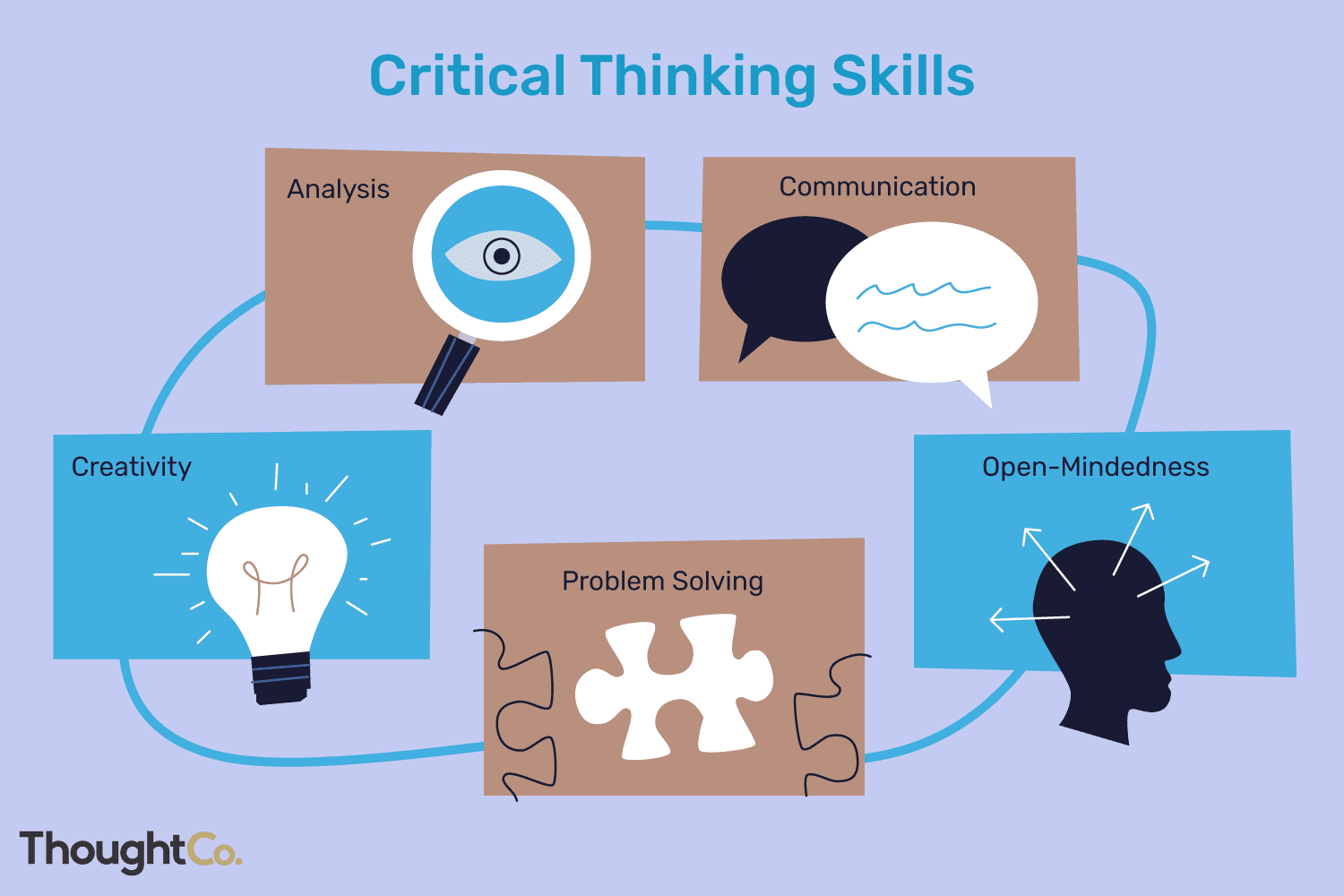
Understanding Critical ThinkingCritical thinking involves the objective analysis and evaluation of information to form a judgment.
It encompasses skills such as:-
-
-
-
-
- Analysis
- Interpretation
- Inference
- Explanation
- Self-regulation
- Open-mindedness
-
-
-
-
Developing these skills enables you to make more informed decisions, solve complex problems, and engage in meaningful discourse across various disciplines.
Tools to Enhance Critical Thinking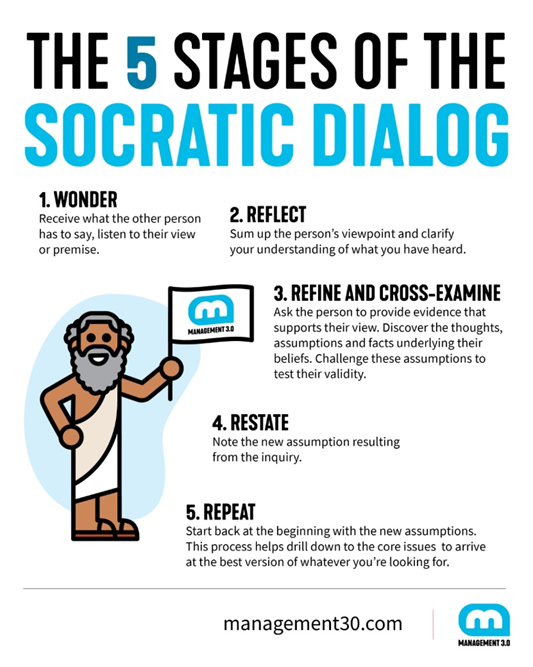
1. The Socratic Method
Named after the ancient Greek philosopher Socrates, this method involves asking probing questions to stimulate critical thinking and illuminate ideas. It encourages deeper exploration of assumptions and beliefs.
Historical Example: Socrates used this method in ancient Athens to challenge his students' beliefs and encourage them to question established norms, as documented in Plato's dialogues.
2. Mind Mapping
Mind mapping is a visual tool that helps organize and structure thoughts, revealing connections between ideas and concepts.
Link: For an interactive mind mapping tool, visit MindMeister
3. SWOT Analysis
SWOT (Strengths, Weaknesses, Opportunities, Threats) analysis is a strategic planning technique used to evaluate a situation or proposal from multiple angles.
Historical Example: NASA used SWOT analysis in the 1960s to evaluate the feasibility of the Apollo moon landing program, helping them identify potential challenges and opportunities.
4. The Five Whys Technique
This iterative questioning technique helps identify the root cause of a problem by repeatedly asking "Why?"
Historical Example: Sakichi Toyoda, the founder of Toyota Industries, developed this technique in the 1930s to improve manufacturing processes.
5. Argument Mapping
Argument mapping is a visual representation of the structure of an argument, showing the relationships between claims, evidence, and objections.
Link: Explore argument mapping with Rationale
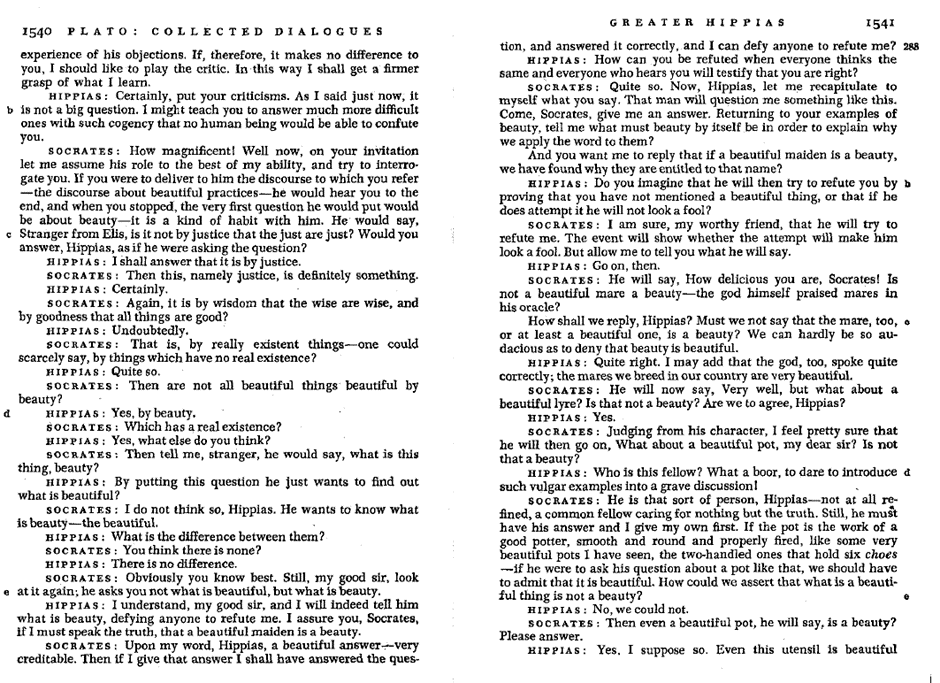
An excerpt from Plato's book On Beauty (4 C. BCE, full audio book)
illustrating the Socratic question/answer model
Applying Critical Thinking ToolsTo effectively use these tools, consider the following steps:
- Identify the problem or question at hand
- Gather relevant information from credible sources
- Apply appropriate critical thinking tools
- Analyze and evaluate the information
- Draw conclusions and make decisions
- Reflect on the process and outcomes
Historical Examples of Critical Thinking- The Scientific Revolution
In the 16th and 17th centuries, scientists like Galileo Galilei and Isaac Newton challenged long-held beliefs about the natural world through observation, experimentation, and logical reasoning. - The Enlightenment
Philosophers such as John Locke and Voltaire promoted rational thinking and skepticism of traditional authorities in the 18th century, influencing political and social reforms. - The Manhattan Project
During World War II, scientists and engineers applied critical thinking to solve complex problems in developing the atomic bomb, demonstrating the power of collaborative problem-solving.
Exercises to Strengthen Critical Thinking Skills
- Analyze Media
Choose a news article and identify potential biases, evaluate the credibility of sources, and distinguish between facts and opinions. - Solve Logic Puzzles
Regularly engage with logic puzzles and brain teasers to improve analytical and problem-solving skills. - Debate Club
Join or start a debate club to practice articulating arguments, considering multiple perspectives, and responding to counterarguments. - Interdisciplinary Studies
Explore connections between different academic disciplines to broaden your perspective and enhance your ability to think critically across various domains. - Reflective Journaling
Keep a journal to reflect on your thought processes, decision-making, and personal biases. This practice promotes self-awareness and metacognition.
Conclusion
Developing critical thinking skills is an ongoing process that requires practice and dedication. By incorporating these tools and exercises into your academic and personal life, you can enhance your ability to analyze information, solve problems, and make informed decisions. Remember that critical thinking is not just about finding the right answers, but also about asking the right questions and approaching challenges with an open and analytical mind.
As you continue to hone your critical thinking skills, you'll find that they become invaluable in navigating the complexities of academic studies, professional endeavors, and everyday life.
-
-
Please find here the PowerPoint presentation for Lesson 11, entitled Critical Thinking Skills & Tools.

-
Here's an annotated bibliography of 5 main references offering a mix of theoretical foundations, practical applications, and educational resources related to critical thinking skills and tools. They provide a solid starting point for anyone looking to deepen their understanding of critical thinking or incorporate these skills into their academic or professional life.
This seminal paper provides a comprehensive overview of critical thinking, its core skills, and its importance in education and daily life. Facione, a leading expert in the field, explores the cognitive skills and dispositions that constitute critical thinking, making it an essential resource for understanding the foundations of this crucial ability.
This concise guide offers a practical approach to understanding and applying critical thinking concepts. Paul and Elder present a framework for critical thinking that includes elements of thought, intellectual standards, and intellectual traits. The guide provides various tools and techniques for improving critical thinking skills, making it valuable for both students and educators.
This academic article proposes an integrated framework for critical thinking, synthesizing various theoretical approaches. The authors discuss the cognitive and metacognitive processes involved in critical thinking and suggest strategies for developing these skills. This paper is particularly useful for those interested in the theoretical underpinnings of critical thinking.
This concise guide offers a practical approach to understanding and applying critical thinking concepts. Paul and Elder present a framework for critical thinking that includes elements of thought, intellectual standards, and intellectual traits. The guide provides various tools and techniques for improving critical thinking skills, making it valuable for both students and educators.
This textbook provides a structured approach to developing critical thinking and problem-solving skills. It covers a wide range of topics, including analyzing arguments, assessing evidence, and making decisions. The book includes numerous exercises and real-world examples, making it an excellent resource for practical application of critical thinking tools.
-
Practise your knowledge about Critical Thinking Skills & Tools by taking this short, 10-question quiz.
-
Curriculum File PDF
This learning scenario expands on the notion of critical thinking and introduces the main critical thinking tool and skills. Critical thinking skills and tools are intended to improve awareness, thinking, and thinking critically, about an angle that the story is being told. Participants will be introduced to various tools and techniques that can significantly improve critical thinking skills and learn to apply them through practical exercises and historical examples. They will also be introduced to the concept of narrative theory that considers every news footage as a narrative, which means that it has someone telling it, and that every story has a particular angle from which it is narrated or told.
-