Lesson 2. Media Types: Traditional vs Digital, Mass & Social
Section outline
-
-
INTRODUCTION
Rapid evolution of different communication platforms has changed the way people access, share and interact with information. The media landscape was previously dominated by traditional platforms such as TV, radio, newspapers, and magazines. Today media has significantly evolved beyond these forms, to include digital and social media, which reflects a interplay between traditional mass communication and new more dynamic formats. The intensity technological development along with the intensity of globalisation has led to the formation of so called “Global villages” where electronic media brings people together by creating an interconnected globalized community (McLuhan, M. 1962).Traditional media relies on well-established practices in journalism and production, which are often viewed as more reliable due to editorial oversight and more structured approach. This is a one-way communication method, which primarily involves the media presenting information to the public with limited immediate interaction (McQuail, 2010).
Digital media on the other hand, emerged with the rise of internet, allowing for more interactive and faster communication. Digital platforms facilitate two-way communication and direct engagement with audiences. This has further evolved into social media platforms where they allow users to create and share content, comment on others’ posts, and rapidly spread information (Castells, 2010). These platforms do allow a quick way of sharing content but it comes at the cost of the credibility of the information, as the standards remain much lower than in traditional journalism. This can contribute to the spread of false information, thus why it is important to fact check the information as well as to do some background research to ensure credibility and avoid spreading false information.
Each type of media has its roles, with traditional formats often viewed as more credible due to their longstanding standards, while digital and social media excel in immediate engagement. As media continue to evolve, understanding these differences remains crucial in understanding how information is created, shared and consumed today.
TRADITIONAL MEDIA TYPES
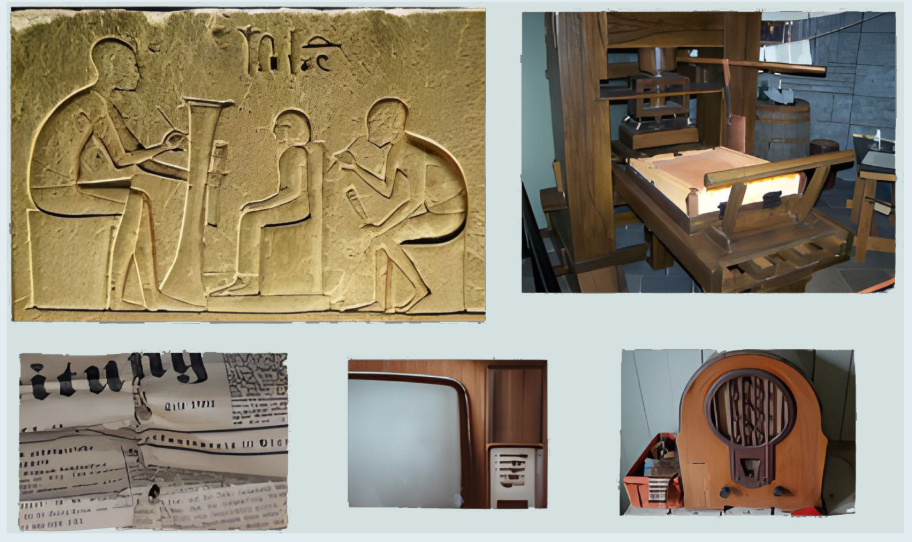
Traditional media is largely defined by one-way communication, where information is broadcasted to the public without direct feedback mechanisms, contrasting with the interactive nature of the digital media. It has served as the cornerstone of mass communication for centuries and it is well known for its structured content delivery.
Print Media
This includes newspapers, magazines, and journals, which have been central to information dissemination and public discourse. Newspapers focus on daily events, providing in-depth reporting, analysis, and editorial perspectives. Magazines offer content tailored to niche audiences, covering different topics. The credibility associated with print media is rooted in its historical reliance on journalistic integrity and comprehensive fact-checking process (Schudson, 2001).
Broadcast Media
It encompasses television and radio, which deliver content to wide audiences through regulated, scheduled programming. TV is notable for its visual appeal, while reaching diverse demographics with news, entertainment, and educational programming. Radio has remained influential in local news dissemination, and real-time updates.
Outdoor Media
Often called out-of-home advertising, includes billboards, posters, and transit advertising. This form is designated to reach people in public spaces, thus maximizing visibility and exposure. Outdoor media relies heavily on visual impact and concise messaging to engage a transient audience (Taylor, 2010).
DIGITAL MEDIA
Digital media have transformed the ways information is created and shared as well as consumed, thus breaking down traditional barriers and introducing a more interactive environment. Digital platforms are characterized by their reliance on internet, allowing for near instant information distribution and feedback from global audiences.
Websites and blogs
Websites and blogs represent a foundational element of digital media, providing platforms for organizations, news outlets, businesses and individuals to share content in visual formats, including articles, videos, and interactive tools. Websites mainly serve as official platforms while blogs allow more for more personal, opinion-based content.
Social Media
Social media platforms - such as Facebook, Twitter, Instagram, and LinkedIn – have redefined digital media by focusing on user generated content and interactivity. These platforms encourage participatory culture, where users are both consumers and creators of content. The viral nature of social media also enables rapid dissemination of information although it raises challenges regarding misinformation and content accuracy.
Video Streaming Services
Streaming services like YouTube, Netflix and Twitch are of central importance to digital media, providing content tailored to individual viewing preferences. Platforms such as YouTube allow users to upload and share videos on diverse topics. Live streaming options further enhance interactivity by enabling real-time comments, creating a direct link between content creators and viewers (Lotz, 2017).
Interactive Media
Interactive Media includes tools and platforms where users engage actively, such as virtual reality environments, augmented reality applications, and interactive educational websites. This provides immersive experiences that go beyond passive content consumption. It allows users to shape and navigate their own experience. This has practical applications in education, training and entertainment, using technologies like VR to simulate real-world scenarios for a more interactive based learning approach (Ryan, 2015).
COMPARING THE TRADITIONAL AND DIGITAL MEDIA
The main distinctions are in audience reach, interaction, accessibility, and credibility. Both types of media play an important role in modern communication, although they serve different functions and target different types of audiences.
Audience Interaction
Traditional media is well known for one-way communication and its passive aspect. Feedback mechanisms such as letters to the editor or call-ins are slower and often limited to specific contexts.
On the other hand, digital media emphasizes the two-way communication, allowing immediate audience feedback through comments, shares, likes and direct messaging.
Accessibility and Reach
Geographical and timing constraints limit the accessibility to the traditional media. For example, broadcast programs are available at set times and newspapers reach audiences primarily within their area.
Content Customization
Traditional media offers standardized content with limited customization. While the digital media uses algorithms to tailor content to individual user preferences based on browsing history, interactions, and demographics. This personalization level attracts users but can create “echo chambers”, reinforcing pre-existing views and limiting exposure to diverse perspectives.
Credibility and Fact Checking
Traditional media is perceived as more credible due to high quality assurance standards as well as established editorial processes. Fact-checking is a core practice, ensuring accuracy through multiple verification stages before publication. On the other hand, concerning digital media, credibility is more variable, as digital platforms allow anyone to publish content without rigours control. This may aid to the spread of fake news through social media, which is why fact-checking initiative are important to counteract misinformation, but still the rapid spread of unverified content remains a challenge (Graves, 2016).
-
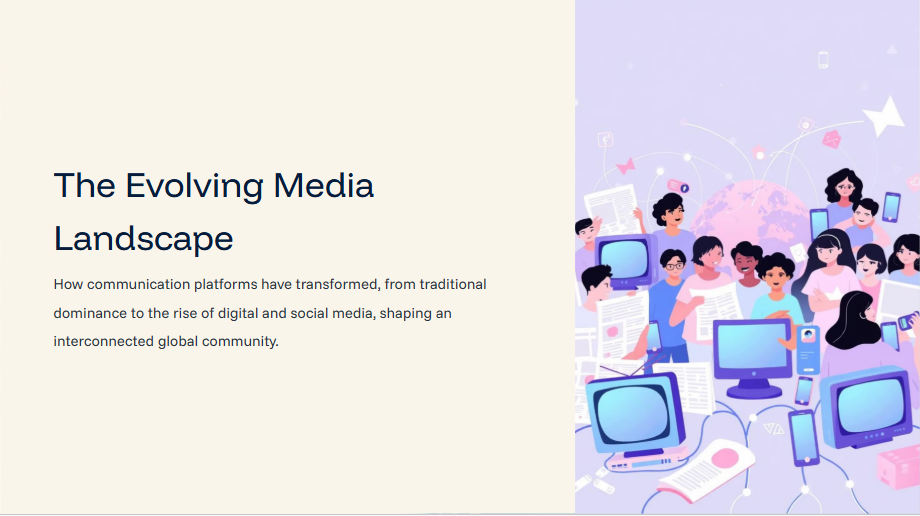
Please find here the PowerPoint presentation for Lesson 2, entitled The Evolving Media Landscape.
-
- McLuhan, M. (1962). The Gutenberg Galaxy: The Making of Typographic Man – a seminal book that analyzes the effects of mass media, especially the printing press, on European culture and human consciousness.
- Graves, L. (2016). Deciding What’s True: The Rise of Political Fact-Checking in American Journalism – plots a compelling, personality-driven history of the fact-checking movement and its recent evolution from the blogosphere, reflecting on its revolutionary remaking of journalistic ethics and practice.
- Castells, M. (2010). The Rise of the Network Society – a groundbreaking volume on the impact of the age of information on all aspects of society.
- Schudson, M. (2001). The Sociology of News – a personal, trenchant, and comprehensive account of the contemporary news media.
-
Practise your knowledge on Traditional vs Digital, Mass and Social media by taking this short, 10 question quiz.
-