Sorting Facts from Fiction: Critical Thinking vs Information Disorder and Propaganda
Section outline
-
Introduction: Informing the Balkans
Welcome to the online course “Sorting Facts from Fiction: Critical Thinking vs Information Disorder and Propaganda”!
This learning program is dedicated to news literacy and critical thinking, and was developed within the MEDActive Youth project, implemented under the Erasmus+ Programme with the support of the European Commission.
Structured into 15 lessons, the course covers all key topics in news literacy, including: Introduction to News Literacy; Media Types: Traditional vs Digital, Mass & Social; The Role of Algorithms and Social Media; Post-Truth & Information Disorder; Effective Search Strategies; Fake News, Dis- and Misinformation; Fact-Checking and Verification Tools; AI-Generated Pictures & Videos; Youth Media Activism; What Is Critical Thinking?; Critical Thinking Skills & Tools; Logical Fallacies; Critically Reading Media Messages; Analysing News Articles; and Global Perspectives on News.
The lessons include text, images, video materials, presentations, relevant literature, and existing Open Educational Resources, as well as quizzes to test your knowledge.
The authors of this self-paced course, which you can follow it whenever and however suits you, 24/7, are the members of the project partners’ expert team, led by team leader Dr. Aleksandar Pavlovic and Romina Begaj.
Enjoy the course!



Funded by the European Union. Views and opinions expressed are however those of the authors only and do not necessarily reflect those of the European Union or the EACEA. Neither the European Union nor the granting authority can be held responsible for them.
-
-
Definition and Scope of News Literacy
News literacy is the ability to critically analyze news sources, identify biases, and evaluate the accuracy of information. With the explosion of digital and social media, news now reaches audiences instantly, but this rapid sharing can sometimes compromise the quality and reliability of information. News literacy helps people discern credible sources from unreliable ones, allowing them to understand what factors make a source trustworthy.
 News literacy in fact goes beyond simple fact-checking. It requires recognizing different types of news content, including hard news, editorials, opinion pieces, and sponsored content. Understanding these distinctions is essential, as each type serves a unique purpose. For instance, opinion articles provide a specific viewpoint and are meant to spark debate, whereas hard news is typically designed to deliver factual information without personal bias.
Moreover, news literacy encourages readers to examine the motives behind news stories. Is a piece intended to inform, convince, or entertain? Are there political, commercial, or ideological motivations at play? Recognizing these underlying factors allows consumers to better assess whether the information they’re receiving is complete, accurate, and balanced.
The Role of News in Society
News plays a foundational role in shaping public understanding and democratic engagement. Its primary function is to keep citizens informed about events and issues that impact their lives, from local happenings to international developments. News offers context for decisions on civic and personal matters, like voting, healthcare, and public policy, giving individuals the information they need to act thoughtfully and responsibly.
In democratic societies, news serves as a tool for accountability. By reporting on government actions, corporate practices, and social issues, journalists hold powerful institutions to account. Investigative journalism, for example, has uncovered major scandals, corruption, and wrongdoing, empowering the public to demand change and justice. Without news, many issues affecting public welfare might go unnoticed, leaving power unchecked and reducing transparency.
News also fosters social cohesion by connecting communities with shared information. When people engage with news, they share common knowledge, which promotes mutual understanding and empathy within society. This collective knowledge is essential for democratic discourse, where differing viewpoints come together to shape policies and influence the public agenda. However, it's worth noting that in today’s media landscape, news can also polarize if it’s delivered in a biased or divisive manner, highlighting the need for a well-rounded, critical approach to media consumption.
Why News Literacy Matters
In today’s media landscape, the need for news literacy is more pressing than ever. The internet has democratized information, making it possible for virtually anyone to produce and share content. While this has made information more accessible, it has also created an environment where misinformation, propaganda, and sensationalism can thrive. This “information overload” makes it challenging to distinguish credible information from falsehoods or biased narratives.
 Misinformation and “fake news” are serious concerns. Misleading information spreads rapidly, especially on social media platforms, often fueling fear, anger, and confusion. False information around critical issues, such as public health, elections, and climate change, can lead to real-world consequences, affecting how people make decisions and respond to events. For instance, during the COVID-19 pandemic, misinformation about the virus and vaccines led to confusion, hesitancy, and, in some cases, detrimental health outcomes.
News literacy equips individuals to recognize and challenge such false narratives. This involves asking questions like: Who created this content? What is their motive? Is this information verified by credible sources?
By fostering these critical thinking skills, news literacy empowers people to make informed decisions based on reliable information rather than falling victim to misinformation.Furthermore, news literacy cultivates responsible media consumption. Consumers learn not only to identify reliable sources but also to understand the ethical responsibilities associated with sharing information. Being media literate means recognizing one’s role in preventing the spread of misinformation. For instance, before sharing an article, one should consider whether it comes from a credible source and verify the information. This practice of self-regulation is essential in maintaining a well-informed society and reducing the negative impact of misinformation on public opinion.
Practical Applications of News Literacy
As further illustration, here are some practical steps to apply news literacy skills in everyday life:
Source Verification: Always check the origin of a news story. Reliable sources generally have a reputation for accuracy and professionalism, such as established newspapers, research institutions, and verified experts. News sites with questionable reputations or biased agendas are less likely to be reliable.
Cross-Referencing: Don’t rely on a single source for news on major topics. Cross-check information with other reputable outlets to confirm its validity. Diverse sources provide a fuller picture, especially on complex issues.
Understanding Biases: Recognize that all media outlets, even reputable ones, may have biases based on their editorial stances or target audience. Being aware of these biases can help you interpret information more objectively. Reading across a range of sources with different perspectives can also help mitigate individual biases.
Fact-Checking Tools: Use fact-checking websites. Facts that you read about on social media can easily be checked by using Google Fact Check or by consulting the website of the International Fact Checking Network at Poynter. Videos can easily be identified and checked by using the YouTube Data Viewer. You can also use Google Lens to take a picture with your phone and find useful information by googling your photo) or you can check your information at local fact-checking organizations or websites to verify questionable claims. These platforms are designed to examine the validity of widely circulated stories and claims.
Mindful Sharing: Before sharing information on social media, take a moment to verify its credibility. Thoughtful sharing helps reduce the spread of misinformation and creates a more informed online community.
 As we navigate an increasingly complex media landscape, news literacy has become now a vital skill. It enables individuals not only to discern the quality and reliability of news but also to recognize the powerful role that news plays in shaping society and public opinion. By cultivating these skills, learners can approach media with a more critical eye, helping them become responsible consumers and contributors to an informed, democratic society.
 -
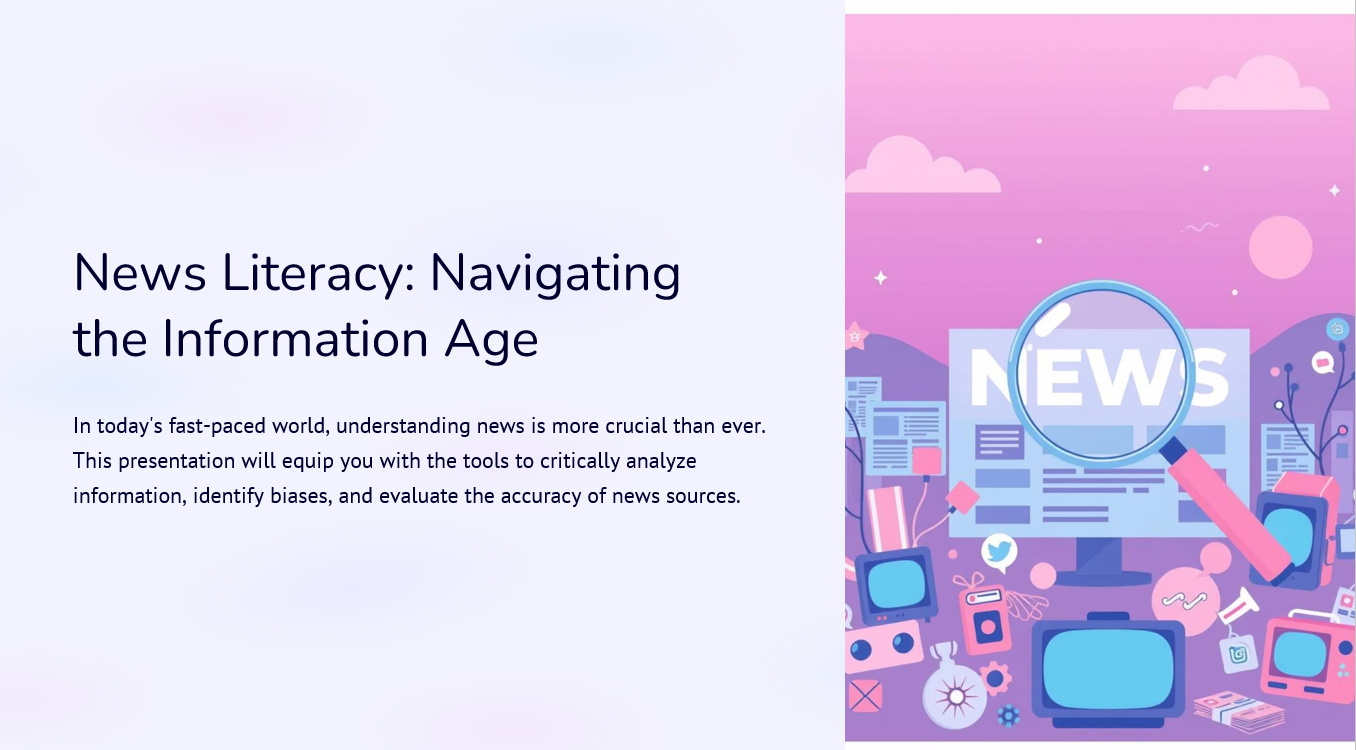
Please find here power point presentation for the Lesson 1, entitled News Literacy: Navigating the Information Age.
-
- An Overview of Media Literacy (EU, 2008) – summarises some general trends in media literacy in the EU over recent decades.
- Grunwald Declaration on Media and Information Literacy in the Digital Era – issued unanimously by the representatives of 19 nations at UNESCO’s 1982 International Symposium on Media Education at Grunwald, Federal Republic of Germany.
- UNESCO – Media Literacy and New Humanism – book on media literacy’s potential for humanisation and fostering the new humanism in order to promote understanding and respect for cultural diversity, encourage intercultural dialogue, and overcome the depersonalising effects of mass technology.
- UNESCO Media Education: A Kit for Teachers, Students, Parents and Professionals – provides a complex and comprehensive view of media education, encompassing all media, old and new.
-
Opened: Tuesday, 10 February 2026, 12:01 PM
Practise your basic news literacy skills by taking this short, 10 question quiz.

-
-
-
INTRODUCTION
Rapid evolution of different communication platforms has changed the way people access, share and interact with information. The media landscape was previously dominated by traditional platforms such as TV, radio, newspapers, and magazines. Today media has significantly evolved beyond these forms, to include digital and social media, which reflects a interplay between traditional mass communication and new more dynamic formats. The intensity technological development along with the intensity of globalisation has led to the formation of so called “Global villages” where electronic media brings people together by creating an interconnected globalized community (McLuhan, M. 1962).Traditional media relies on well-established practices in journalism and production, which are often viewed as more reliable due to editorial oversight and more structured approach. This is a one-way communication method, which primarily involves the media presenting information to the public with limited immediate interaction (McQuail, 2010).
Digital media on the other hand, emerged with the rise of internet, allowing for more interactive and faster communication. Digital platforms facilitate two-way communication and direct engagement with audiences. This has further evolved into social media platforms where they allow users to create and share content, comment on others’ posts, and rapidly spread information (Castells, 2010). These platforms do allow a quick way of sharing content but it comes at the cost of the credibility of the information, as the standards remain much lower than in traditional journalism. This can contribute to the spread of false information, thus why it is important to fact check the information as well as to do some background research to ensure credibility and avoid spreading false information.
Each type of media has its roles, with traditional formats often viewed as more credible due to their longstanding standards, while digital and social media excel in immediate engagement. As media continue to evolve, understanding these differences remains crucial in understanding how information is created, shared and consumed today.
TRADITIONAL MEDIA TYPES

Traditional media is largely defined by one-way communication, where information is broadcasted to the public without direct feedback mechanisms, contrasting with the interactive nature of the digital media. It has served as the cornerstone of mass communication for centuries and it is well known for its structured content delivery.
Print Media
This includes newspapers, magazines, and journals, which have been central to information dissemination and public discourse. Newspapers focus on daily events, providing in-depth reporting, analysis, and editorial perspectives. Magazines offer content tailored to niche audiences, covering different topics. The credibility associated with print media is rooted in its historical reliance on journalistic integrity and comprehensive fact-checking process (Schudson, 2001).
Broadcast Media
It encompasses television and radio, which deliver content to wide audiences through regulated, scheduled programming. TV is notable for its visual appeal, while reaching diverse demographics with news, entertainment, and educational programming. Radio has remained influential in local news dissemination, and real-time updates.
Outdoor Media
Often called out-of-home advertising, includes billboards, posters, and transit advertising. This form is designated to reach people in public spaces, thus maximizing visibility and exposure. Outdoor media relies heavily on visual impact and concise messaging to engage a transient audience (Taylor, 2010).

DIGITAL MEDIA
Digital media have transformed the ways information is created and shared as well as consumed, thus breaking down traditional barriers and introducing a more interactive environment. Digital platforms are characterized by their reliance on internet, allowing for near instant information distribution and feedback from global audiences.
Websites and blogs
Websites and blogs represent a foundational element of digital media, providing platforms for organizations, news outlets, businesses and individuals to share content in visual formats, including articles, videos, and interactive tools. Websites mainly serve as official platforms while blogs allow more for more personal, opinion-based content.
Social Media
Social media platforms - such as Facebook, Twitter, Instagram, and LinkedIn – have redefined digital media by focusing on user generated content and interactivity. These platforms encourage participatory culture, where users are both consumers and creators of content. The viral nature of social media also enables rapid dissemination of information although it raises challenges regarding misinformation and content accuracy.
Video Streaming Services
Streaming services like YouTube, Netflix and Twitch are of central importance to digital media, providing content tailored to individual viewing preferences. Platforms such as YouTube allow users to upload and share videos on diverse topics. Live streaming options further enhance interactivity by enabling real-time comments, creating a direct link between content creators and viewers (Lotz, 2017).
Interactive Media
Interactive Media includes tools and platforms where users engage actively, such as virtual reality environments, augmented reality applications, and interactive educational websites. This provides immersive experiences that go beyond passive content consumption. It allows users to shape and navigate their own experience. This has practical applications in education, training and entertainment, using technologies like VR to simulate real-world scenarios for a more interactive based learning approach (Ryan, 2015).
COMPARING THE TRADITIONAL AND DIGITAL MEDIA
The main distinctions are in audience reach, interaction, accessibility, and credibility. Both types of media play an important role in modern communication, although they serve different functions and target different types of audiences.
Audience Interaction
Traditional media is well known for one-way communication and its passive aspect. Feedback mechanisms such as letters to the editor or call-ins are slower and often limited to specific contexts.
On the other hand, digital media emphasizes the two-way communication, allowing immediate audience feedback through comments, shares, likes and direct messaging.
Accessibility and Reach
Geographical and timing constraints limit the accessibility to the traditional media. For example, broadcast programs are available at set times and newspapers reach audiences primarily within their area.
Content Customization
Traditional media offers standardized content with limited customization. While the digital media uses algorithms to tailor content to individual user preferences based on browsing history, interactions, and demographics. This personalization level attracts users but can create “echo chambers”, reinforcing pre-existing views and limiting exposure to diverse perspectives.
Credibility and Fact Checking
Traditional media is perceived as more credible due to high quality assurance standards as well as established editorial processes. Fact-checking is a core practice, ensuring accuracy through multiple verification stages before publication. On the other hand, concerning digital media, credibility is more variable, as digital platforms allow anyone to publish content without rigours control. This may aid to the spread of fake news through social media, which is why fact-checking initiative are important to counteract misinformation, but still the rapid spread of unverified content remains a challenge (Graves, 2016).
-
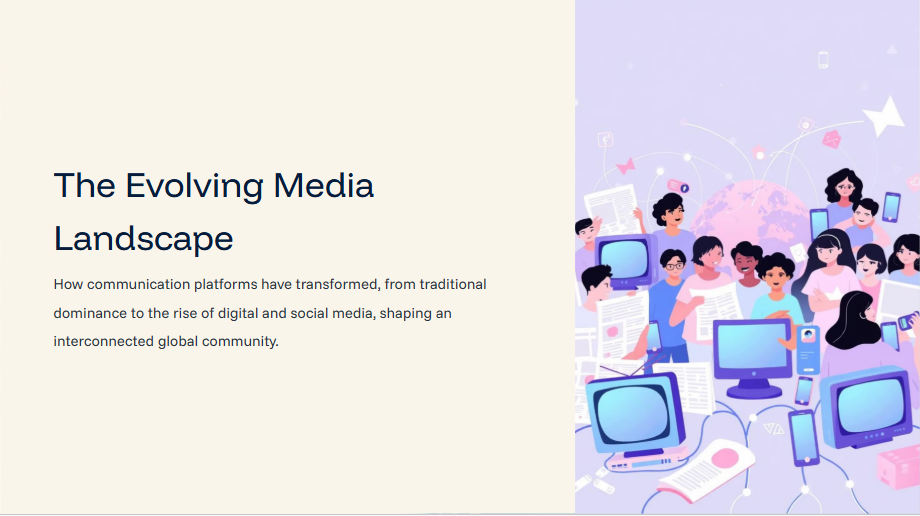
Please find here the PowerPoint presentation for Lesson 2, entitled The Evolving Media Landscape.
-
- McLuhan, M. (1962). The Gutenberg Galaxy: The Making of Typographic Man – a seminal book that analyzes the effects of mass media, especially the printing press, on European culture and human consciousness.
- Graves, L. (2016). Deciding What’s True: The Rise of Political Fact-Checking in American Journalism – plots a compelling, personality-driven history of the fact-checking movement and its recent evolution from the blogosphere, reflecting on its revolutionary remaking of journalistic ethics and practice.
- Castells, M. (2010). The Rise of the Network Society – a groundbreaking volume on the impact of the age of information on all aspects of society.
- Schudson, M. (2001). The Sociology of News – a personal, trenchant, and comprehensive account of the contemporary news media.
-
Practise your knowledge on Traditional vs Digital, Mass and Social media by taking this short, 10 question quiz.

-
-
-
Today, the main source of news and information is social media, especially for young people. This means that both the news publishers and the consumers are dependent on algorithms that completely determine the type of content that will be disseminated to consumers. Regarding news publishers, this means they have to adapt their titles, photographs, and entire articles to the engagements, clicks, and shares on the social media they are posting to.
 Social media algorithms are sets of calculations and rules used by the platforms to prioritize the content users see in their feeds. Put simply, the more time you spend looking at a post (image, video, text, etc.) more similar content you will see on your feed. If you engage in any way with this content (read comments, like, comment, share, and save) the amount of similar content that shows in your feed will increase further. This is not limited to one social media. If you, for example, engage with a certain type of content on Facebook it is most likely that similar content will show up in all other social media feeds you have. Certain platforms will use the information you provide in your profile to provide you with ‘suitable’ news content based on your nationality, race, age, the place where you live, education, place of work, etc. Every single social media platform constantly monitors the activity of their users to determine what type of content will be the most interesting for them. All with one goal – to make them spend as much time as possible on social media platforms. So, what does this goal mean for the dissemination and promotion of news content?
The use of algorithms may sound appealing to some as it would help sort through content easier. However, algorithms can also be used to limit or completely exclude opinions and information if it is evaluated that such content is not engaging for targeted users. They are also used to determine the order and time content is shown to users. This means that usually, informing oneself only through social media will cause the person to have a significantly biased and limited opinion. Algorithms are fed on confirmation bias and they create filter bubbles, amplifying users’ behavioral patterns and limiting critical thinking.
Examples from practice
The U.S. elections are usually the most followed elections in the world. They are so popular that studies have been made on how citizens of other countries would vote if they were an American citizen. Consequently, the influence of algorithms on politics is usually researched through these elections and American citizens.
For example, studies show that more than half of Facebook users researched are shown like-minded political content, and only 14.7% of users report regularly seeing cross-cutting content (for example, liberals seeing conservative content, or vice versa). Furthermore, research shows that Twitter (now known as X) significantly reduced votes that Donald Trump received in 2016 and 2020 due to “liberal” tweets that swayed voters with moderate views to not vote for Donald Trump. This shows how social media can have a severe impact on election results. If we factor algorithms into this and consider how they significantly limit the content users can see, we cannot wonder whether social media should be more heavily controlled when it comes to news reporting.
Furthermore, algorithms increase the consumption of fake news. Since algorithms are based on targeting the audience with content they have spent most of their time on, this can cause a warped sense of reality and information. In a practical example, this was seen during the Covid-19 pandemic with a severe influence of fake news on vaccines and rise in the anti-vax movement.
Most of the information that was used as “valid arguments” to back up attitudes against vaccines came from social media and YouTube rather than peer-reviewed articles. Reading a couple of these articles is enough for algorithms on every single platform to start “spamming” the same content in order to grab its user’s attention and make them spend as much time as possible online.
Diversifying news consumption
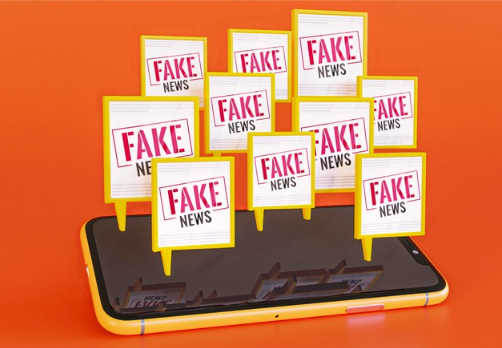 In order to avoid any of the negative effects of one-sided news that are mostly brought on by algorithms, as explained above, there are a couple of steps that should be taken. First of all, it is important to note that diversifying news consumption is not solely important for getting accurate information, having multiple sources of news, the easier checking of accuracy, but it is also very important for one’s mental health. When constantly surrounded by one type of news (especially if it is negative), this can have a severe impact on mental health.
Research shows that news consumption, especially sensationalized news stories can lead to an increased chance of anxiety, depression, and suicidal tendencies. This is why it is important to note that you can do a couple of things to diversity your news consumption:• Assess your current news and social media habits.
See if you are only receiving your information and reading news articles that show up on your feeds. Write down the topics that show up the most commonly and see whether there is a pattern that would indicate this is due to algorithms.
• Consider what kind of news are out there.
Talk to your family and friends about their media consumption habits. See if they have any different habits that might help diversify your own. You can also do your own research and read from media that does not show up on your feed too often or at all.
• Diversify your resources.
There is nothing wrong with getting your information from social media. But, getting your information solely from social media is not right. Try to diversify your information sources, especially if you manage to find sources that are accurate and do not tend to write sensationalized news stories made for clicks and shares.
• Check for credibility.
Usually, multiple news will write about the same topic or event. If you find yourself having interest in a certain topic or event, try to read about this from multiple sources, especially the more credible ones. Remember, if you keep opening articles that have the same point of view on the issue, only these articles will be shown to you. Sometimes you have to look for the opposing view yourself if you want to get an accurate picture and adequately form your opinion on the matter.
• Make sure it is useful to you.
Try to focus on the news that interest you, from reputable sources. Sensationalized news stories usually show up on social media feeds because they attract the most clicks and shares even if its readers are not interested in the topic itself. So, stay within your lane of interests and keep in mind whether the goal of the story is to inform the readers or to make them click and share further.
There are some questions you could ask yourself (and others) to check whether you and they are diversifying their news consumption:

- Am I using a wide range of different sources?
- Is the news I’m reading interesting to me?
- Am I aware that even though sensationalized stories are interesting, exciting, or infuriating, they can also be false?
- Is the news I am reading well-researched, credible, and using legitimate resources in their articles?
- Am I using different apps and publishers to get my news?
And, sometimes, you just need a break. - Am I using a wide range of different sources?
-
Please find here the PowerPoint presentation for Lesson 3, entitled The Algorithmic Echo Chamber: Navigating News in the Social Media Age.
-
- Algorithms & Quality News – how can we ensure that algorithms identify and promote fact-based, independent journalism?
- 2020 Election Studies Reveal Power of Facebook, Instagram Algorithms – research, published in Science and Nature, part of the most comprehensive scholarly project to date examining role of social media in American democracy.
- The Effect of Social Media on Elections: Evidence from The United States – e-study on how social media affects election outcomes in the United States.
- How Facebook's newsfeed algorithm shapes childhood vaccine hesitancy – to decrease the effectiveness of vaccine dis(mis)information, it is critical to educate the public about how social media newsfeed algorithms make content-display decisions.
-
Practise your literacy skills by taking this short, 10 question quiz on the role of algorithms and social media.

-
-
-
Introduction
Nowadays, the media and the internet are flooded with vast quantities of information, which often include a significant amount of false content. This overload of information places the burden on individuals to discern what is true and what is false.
The consequences of widespread misinformation can be significant. If a substantial portion of the population subscribes to factually incorrect beliefs, it may lead to misinformation underpinning political and societal decisions that undermine the overall well-being of the community. Such dynamics highlight the critical importance of accurate information in shaping both collective policy and individual choices.
To effectively combat misinformation and disinformation, it is essential to grasp several key concepts. This includes understanding the mechanisms through which people acquire information and develop their opinions and beliefs. Additionally, it is important to analyse how such false information is created, disseminates, and the reasons why its effective.
Post-Truth
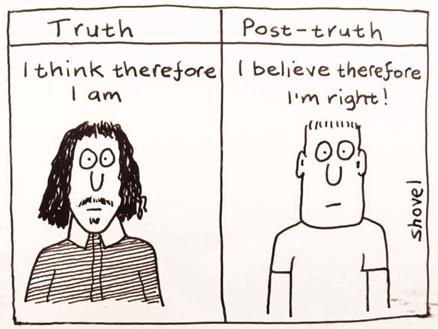
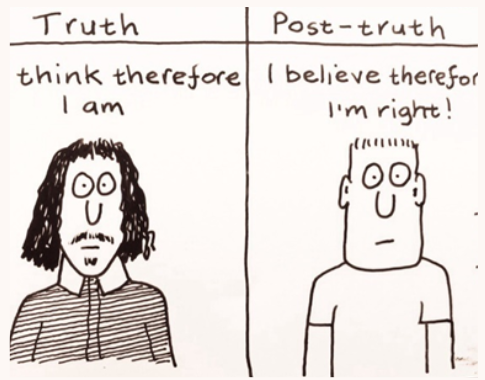
People increasingly believe information that appeals to their emotions and their personal beliefs, as opposed to seeking and accepting information that is regarded as factual and objective
Post-truth is defined as relating to or denoting circumstances in which objective facts are less influential in shaping public opinion than appeals to emotion and personal belief.
Post-truth politics thrived in a polarised environment, where “the idea of truth is already split into notions of my truth vs. your truth”. Fake news further sharpens polarisation, causes corruption and damages “the fabric of democracy”. In other words, existing political and social polarizations are reinforced by fake news.
Information DisorderThe term "fake news" fails to encompass the full spectrum of misleading content, as some such content is not necessarily false. To address this limitation, the concept of "information disorder" has been introduced, reflecting a complex phenomenon characterized by varying degrees of deception and harm. There is low-level information pollution, which is relatively benign, and high-level information which is profoundly misleading. Information disorder is classified into three categories.
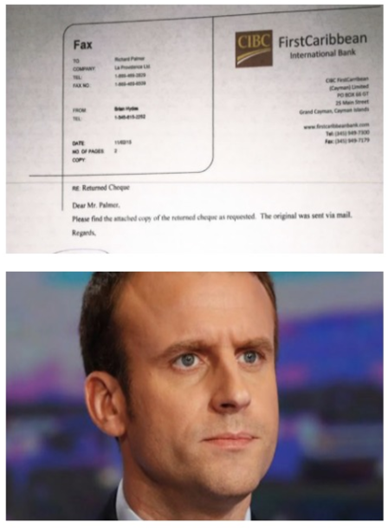 1. Disinformation: Disinformation is content that is intentionally false and shared to cause harm. Examples include fabricated or manipulated/doctored audio-visual content, conspiracy theories or rumours.
For instance, during the 2017 French Presidential election a rumour spread on social media that Emmanuel Macron had a secret offshore account in the Bahamas. Documents circulated online such as the contract with the bank (including Macron’s signature and the contact information of the bank) were all proved to be fabricated. The aims was to discourage French voters from voting Macron.In the last three years, numerous misinformation were spread about the war in Ukraine. Snopes article UKRAINE: New Crisis, Grimly Familiar Disinformation Trends exposes a number of re-hashed videos, offensive memes, fear-mongering conspiracy theories as disinformation.
2. Misinformation: This happens when false information is shared, but no harm is intended. When disinformation is shared by a person who doesn’t realise that it is false or misleading, it turns into misinformation. This includes inaccurate photo captions, dates, statistics, translations.
 Example: In 2017, three French Police officers and a tourist were shot by an ISIS fighter. The day after the misfortunate event, a video posted by Paul Golding, the leader of a far-right British political organization, claimed that London Muslims were celebrating the terrorist attack. In fact, the video was originally posted on YouTube in 2009 and showed a group of Pakistanis celebrating Pakistan's victory in a cricket match.
3. Malinformation: Sharing genuine information to cause harm often by moving information that should remain private to the public sphere or malicious distortion of genuine information such as context, date or time.
Example: In 2016, the email account of John Podesta, chair of Hillary Clinton's presidential campaign, was hacked and his emails were released by Wikileaks. Podesta refused to confirm or deny the emails' authenticity. The investigation by U.S. intelligence agencies reported there was no evident forgery. Most of the emails reflected ordinary campaign communications, however the leak shed light on the inner workings of the presidential campaign.
Types of Information DisorderManipulated Content
This is when genuine content is tampered with or doctored in some way to decieve.
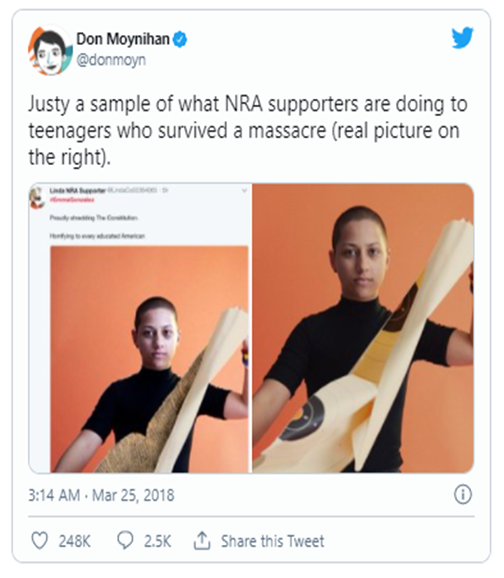
Example: Student Emma Gonzalez and three of her peers who survived a school shooting in Florida were photographed to appear on the front cover of Teen Vogue and the magazine created a video of Gonzalez ripping a gun target in half. This video was altered so it appeared Gonzalez was ripping the US Constitution in half.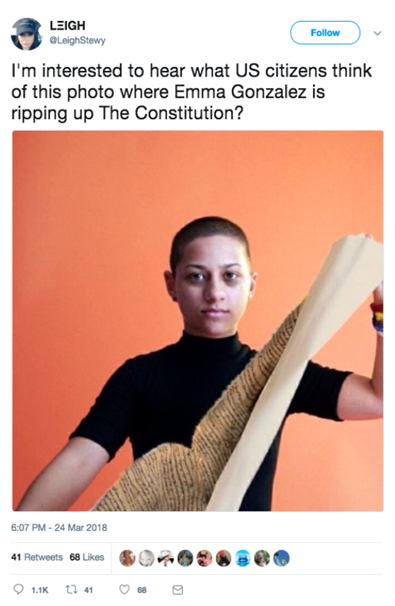
Fabricated Content
This category describes content which has no factual basis and is entirely fabricated.
Example: In 2012 a video posted on YouTube by MrNuclearCat, shows an eagle swooping down, snagging a baby off the ground, then dropping him a few seconds later. The video was created by three students of a Montreal design college as part of a class assignment to create content that might successfully hoax viewers.Deepfakes
Fabricated content, which is used to manufacture a video and audio, creating convincing but false representations of people.
Misleading Content
Authentic information presented out of context. It can come in many forms such as the selection of a partial segment from a quote to support a point, creating statistics that support a particular claim.
Example: Claims that UNESCO removed the birthplace of Jesus from its World Heritage List omitted the context that the site was merely removed from the "in danger" list due to restoration efforts.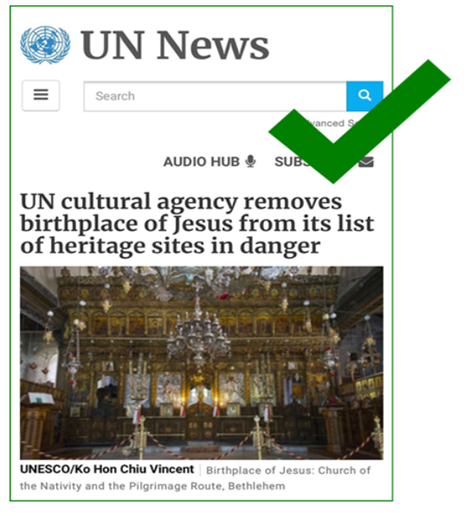
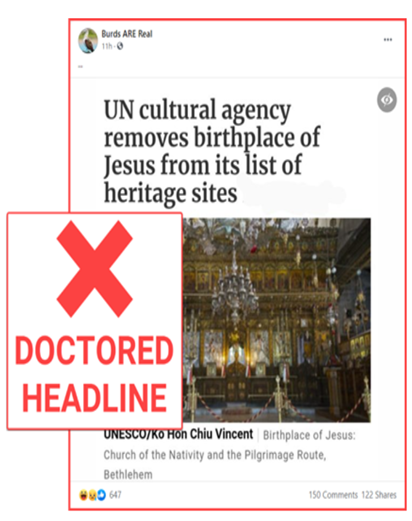
False ContextContent that is genuine but has been reframed and shared with false contextual information.
Example: In 2019, images of rubbish in Hyde Park were incorrectly linked to a global-warming protest, though the event had no connection to the protest.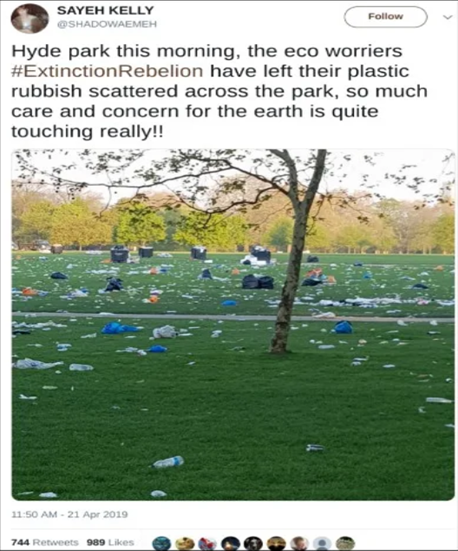
False Connection
It is a technique called clickbait, that is used for attracting attention and driving clicks through rather misleading and sensational headlines, visuals, or captions.
Example: Claims of “houses for £1 in Italy” often omit significant renovation costs (obligatory), misleading potential buyers.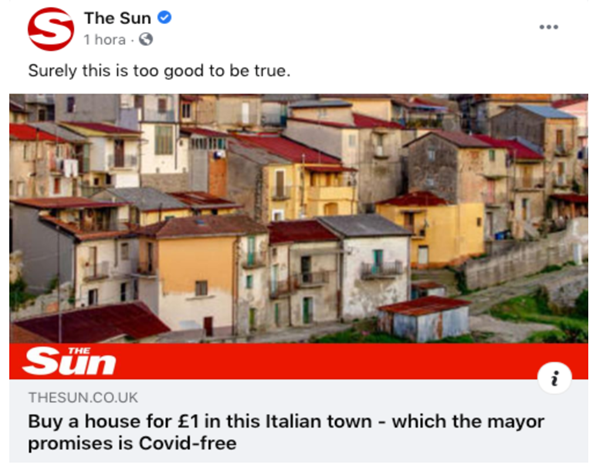
Imposter Content
This category describes impersonation of genuine sources. For instance, the logo of a well-known brand or name is used alongside false content.
Example: An imposter website mimicking the Belgian newspaper Le Soir falsely claimed that Macron’s campaign was funded by Saudi Arabia, spreading misinformation during the 2017 French elections.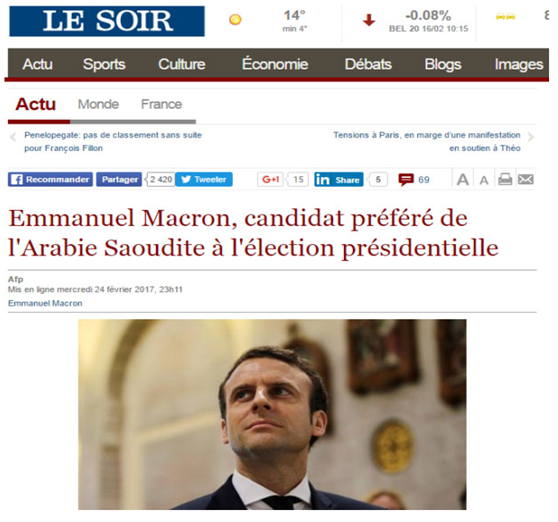
Conspiracy Theories
Conspiracy theories attempt to explain significant events and circumstances as the malicious acts of secret and powerful people and groups.
Example: Unfounded claims about COVID-19’s origins in a Chinese lab persisted despite scientific evidence refuting these theories.
Satire and Parody
Generally, news satire and news parody are not included within the information disorder typology because they have no intention to mislead or cause harm. However, they have the potential to fool people. When it is shared and re-shared, the original context of the content can get lost.
Example: A parody article naming Kim Jong-Un as the "Sexiest Man Alive" in 2012 was mistaken as genuine by some news outlets.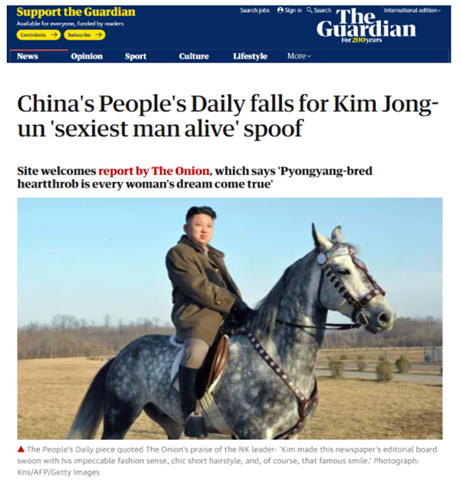
Addressing Information Disorder
Navigating misinformation requires critical thinking skills and combatting information disorder requires a multifaceted approach:
- Education: Promoting media literacy to help students critically approach and evaluate content.
- Regulation: Different platforms should implement measures that reduce the spread of misinformation.
- Technology: Developing tools to detect and flag fabricated content.
ConclusionInformation disorder poses significant challenges in the digital age. By understanding its types and mechanisms, students can become more aware and reduce the harm caused by such false content. Therefore, as we all face these issues daily it is important to foster critical thinking and media literacy.
-
Please find here the PowerPoint presentation for Lesson 4, entitled Post-Truth & Information Disorder.
-
- Understanding Information disorder – examines the complexities of our polluted information ecosystem, emphasizing the importance of precise terminology and definitions in addressing challenges like disinformation, misinformation, and malinformation.
- In this short lecture about post-truth, journalist Charles Sykes tackles questions such as: Do facts matter anymore? Do voters care about falsehoods? What is the future of democracy in a world of "fake news"? When did any news we don't like become "fake news"? How can we ever know who to believe? What's happened to us, and what can we do to fix it?
-
Practise your knowledge on post-truth and information disorder by taking this short, 10 question quiz.
-
-
-
Introduction
The internet is like a massive library, packed with information on virtually any topic you can imagine. Yet, despite its depth, finding exactly what you're looking for can feel like hunting for a needle in a haystack. We've all had the experience of typing in a search query only to end up scrolling through page after page of results that just don't seem relevant. It can be frustrating, especially when you need information quickly or when you're looking for something very specific.
To make the most of this powerful tool, it helps to learn a few key techniques for searching effectively and making sure the information you find is reliable. Using precise keywords, employing search operators, and understanding how to filter and refine results can make a big difference in the quality of the information you get. Knowing where to look is just part of the equation, though. Verifying your sources, checking for bias, and cross-referencing details are essential steps to ensure that you're not just finding information, but finding the right information.
With a few adjustments to your search habits, you can transform what might feel like an overwhelming flood of data into a resource you can really use to your advantage. Whether you're a student, a professional, or just someone with a curious mind, knowing how to navigate the internet effectively can save you time, enhance your learning, and even help you spot misleading or biased information before it influences your understanding of a topic. In a world where the internet is our primary source of information, these skills are more important than ever.
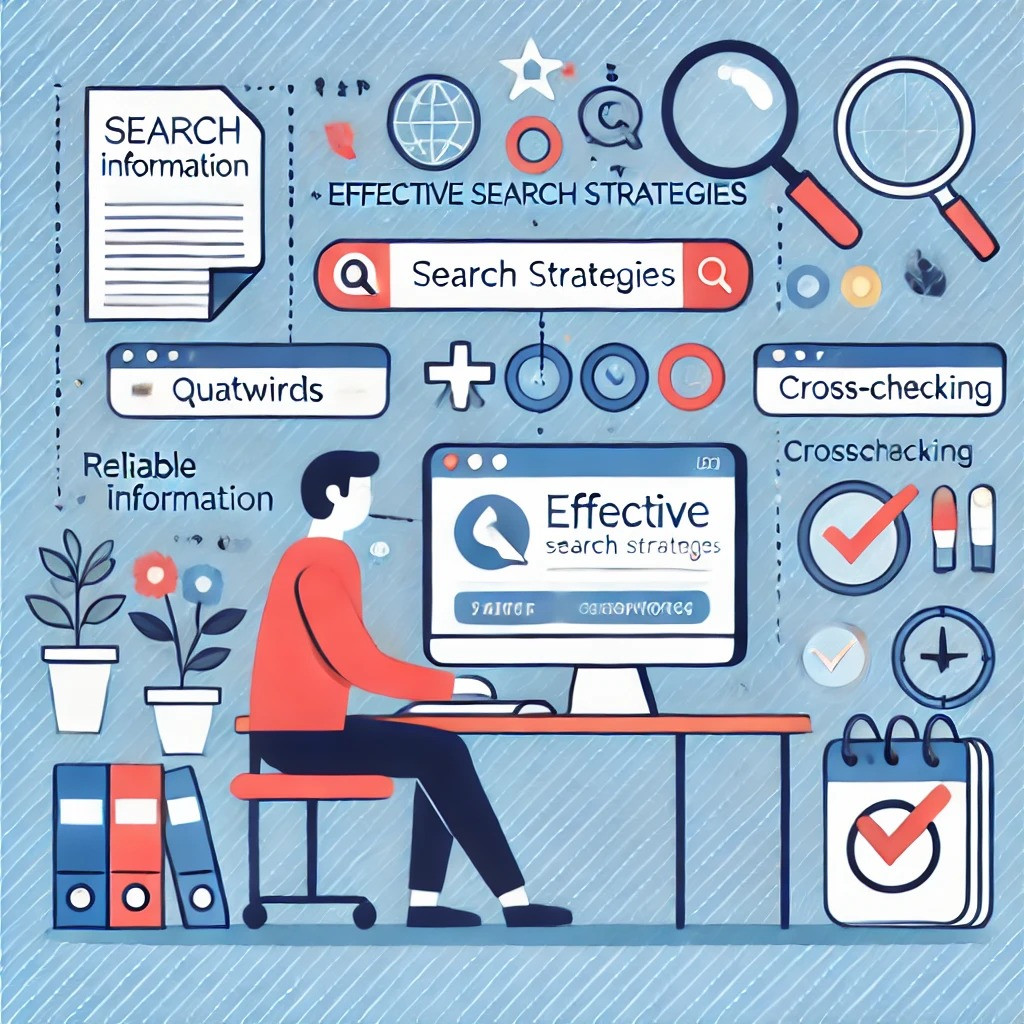
In this lesson, we’ll explore three main strategies to enhance your search abilities:
- Using Keywords and Operators: Learn how to refine searches with precise words and symbols.
- Using Advanced Search Tools: Use filters and operators to narrow down results to the most relevant ones.
- Cross-Checking Information: Understand how to verify facts and assess the credibility of sources.
Using Keywords and Operators
The keywords and phrases you use in a search can greatly impact the quality of the information you find. Keywords help search engines identify the main topics you’re looking for, while operators can add further detail or exclude irrelevant information.
Some examples of Effective Keywords:
Imagine you’re researching the impact of climate change on agriculture. Typing “climate change” alone brings millions of results, many of which might not relate to agriculture. By adding more specific keywords, like “effects of climate change on agriculture,” you narrow the search.
How to Use Search Operators
Operators are symbols or words you can add to your search to refine results even further. Each paragraph breaks down a search operator in simple language with an example, making it easy for learners to understand and apply these techniques in their own searches.:
- Quotation Marks (" "): Place quotes around a phrase to search for exact matches. For instance, searching for “effects of climate change on agriculture” will return only results with that exact phrase.
- The Minus Sign (-): Place a minus sign before a word to exclude it from your results. For example, “climate change agriculture -economics” will exclude any pages focused on economics, letting you focus on agricultural impacts.
- The OR Operator: Use "OR" to include either one term or another. Searching “climate change OR global warming” brings up results that discuss either term, broadening your scope. Using these operators allows you to better control the types of information you receive and avoid sifting through irrelevant pages.
- Using the Asterisk (*) as a Wildcard: The asterisk (*) can act as a placeholder for missing words in your search. It’s useful when you want variations of a phrase or when you're unsure of the exact wording. For example, typing "climate * impact" will return results for phrases like "climate change impact" or "climate policy impact." This operator is helpful when you know parts of a phrase but need flexibility for variations.
When your basic search strategies aren’t enough, most search engines offer advanced tools to help you dig even deeper and refine your results. For instance, Google’s advanced search options allow you to filter results by language, region, and date range, which is especially helpful if you’re looking for the latest updates or sources from specific countries.
You can also search by file type to find PDFs, Word documents, or PowerPoint presentations directly, which can be a huge time-saver when you need credible, detailed information. These tools provide more precision, allowing you to focus on exactly what you need without wading through endless irrelevant pages. Using them effectively can turn a basic search into a powerful tool for finding the most accurate and relevant information available.
By using these filters, you can avoid wading through irrelevant pages and focus only on the content that truly matches your needs. Whether you’re looking for a recent study, a report from a specific country, or a PDF document, advanced search tools can make your search more targeted and effective.
Cross-Checking Information: The Key to Reliability
One of the biggest challenges in today’s information-heavy world is ensuring that what you find is credible. Misinformation and bias are widespread, so it’s crucial to cross-check the facts you encounter. This process involves verifying information from multiple sources to ensure consistency and accuracy.
Always prioritize reputable sources, such as peer-reviewed journals, government publications, and articles from well-established news organizations. Academic or government websites (.edu, .gov) are particularly trustworthy. Additionally, websites that present factual information with citations and sources are more reliable than those that offer opinions or unchecked claims.
When verifying facts, remember that even sources that seem trustworthy at first glance should be checked. If two or more reputable sources corroborate the same information, you can be more confident in its accuracy.

In an age of information overload, knowing how to search effectively can save valuable time, boost the quality of your research, and ensure you’re relying on accurate sources. When you know how to use keywords and search operators, you can quickly filter out irrelevant results and focus on what matters. Adding advanced search tools into the mix gives you even more precision, helping you target specific types of content or narrow your search by date, domain, or file type. And by cross-checking information across multiple trusted sources, you gain a fuller, more reliable picture of the topic. Mastering these techniques will make navigating the vast digital world simpler, more efficient, and, above all, much more reliable.
Whenever you need to search online, these strategies will help you cut through the noise and focus on reliable sources. Effective search skills aren’t just for school—they’re essential tools for everyday life. With practice, you’ll be able to find credible information faster, understand different perspectives, and make better-informed decisions. So, next time you need to find something online, remember these tips and make your search smarter, not harder.
-
Please find here the PowerPoint presentation for Lesson 5, entitled Effective Search Strategies.
-
- Online Search Tips | How to Search – this page sets out our favourite tips and tricks to help with online searches are several ways to improve searching techniques.
- Web Searching Skills – by following a few basic search tips, you’ll be able to find what you are looking for quickly and easily.
- Discover Why Quotation Marks Can Revolutionize Your Search Results – an article by Tim Fisher on why and how search quotes help you find better results.
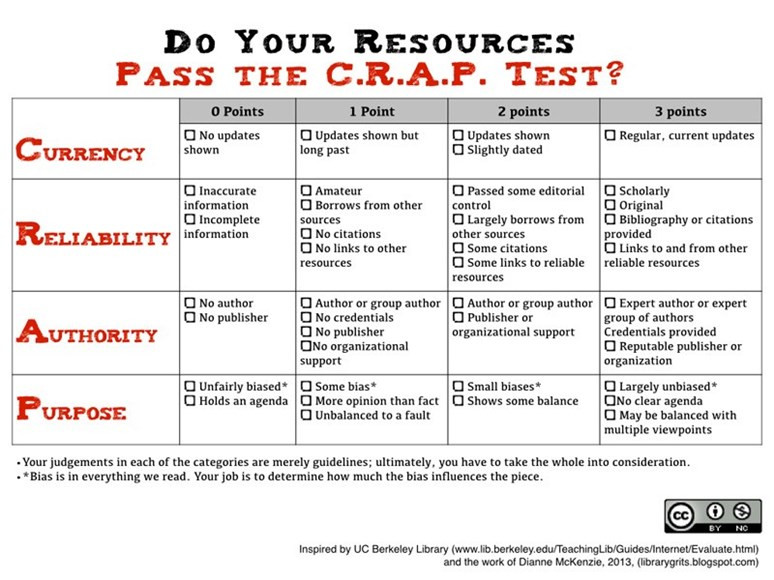
- CRAAP test – a helpful tool to use when trying to decide if a website is a credible, valid source. The CRAP Test looks at four major areas: currency, reliability, authority and purpose.
- How to Verify Information Online ─ Tips for Finding Credible Sources – practical tips for identifying credible sources. These strategies will help you navigate through the sea of information more effectively.
-
Practise your knowledge on the effective search strategies by taking this short, 10 question quiz.
-
-
-
Introduction
In today’s digital world, distinguishing between fact and fiction is essential. In this lesson, you will learn how to identify “fake news” and understand the difference between disinformation and misinformation. We’ll look at examples and practice skills that help you spot misleading information.
Objectives
By the end of this lesson, you will be able to:
- Define fake news, disinformation, and misinformation.
- Identify examples of disinformation and misinformation.
- Use practical tools to verify information and assess its reliability.
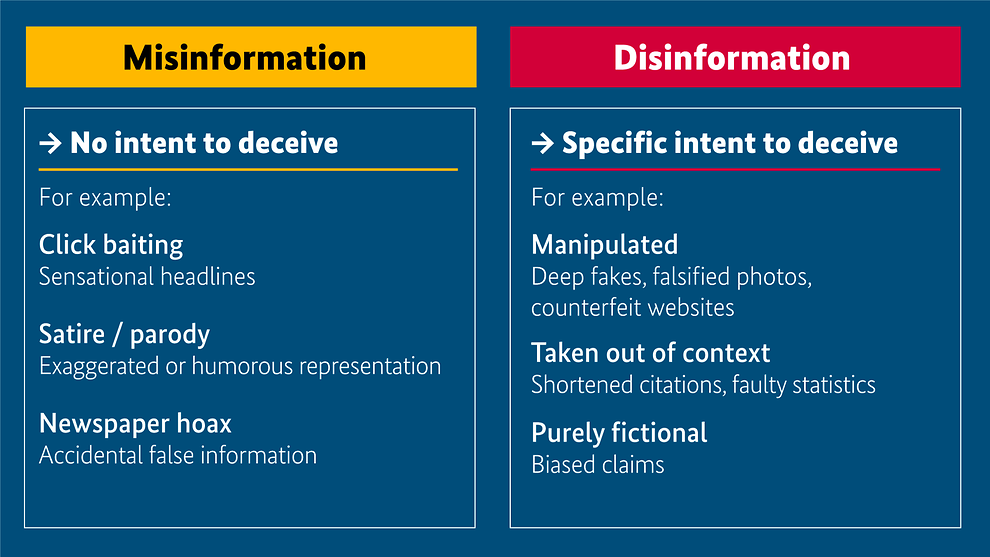
Definitions and Key ConceptsOne of the biggest challenges in today’s information-heavy world is ensuring that what you find is credible. Misinformation and bias are widespread, so it’s crucial to cross-check the facts you encounter. This process involves verifying information from multiple sources to ensure consistency and accuracy.
- Fake News: False information presented as news.
It can be spread through traditional media or social media. - Disinformation: False information that is intentionally created to mislead people.
- Misinformation: Incorrect information that is shared without harmful intent,
usually out of error or misunderstanding.
Example:
Imagine you see a post on social media claiming that a celebrity is quitting their career to start a new business in your country. If this is just a rumour shared without fact-checking, it’s misinformation. However, if someone created the story to promote an unrelated product by using the celebrity’s name, it’s disinformation.
Source: Bundesregierung.de
Why Do People Create and Share Fake News?Fake news can spread for many reasons:
- Financial gain: Some people create fake news to attract clicks and make money from ads.
- Political agenda: Disinformation can be used to sway public opinion or manipulate election outcomes.
- Entertainment or Humour: Satirical news can sometimes be mistaken for real news if not labelled clearly.
Activity:
Think of a recent example where you saw or heard something that turned out to be false. Was it shared intentionally (disinformation) or by mistake (misinformation)? What might have been the reason behind it?
Identifying Disinformation and Misinformation
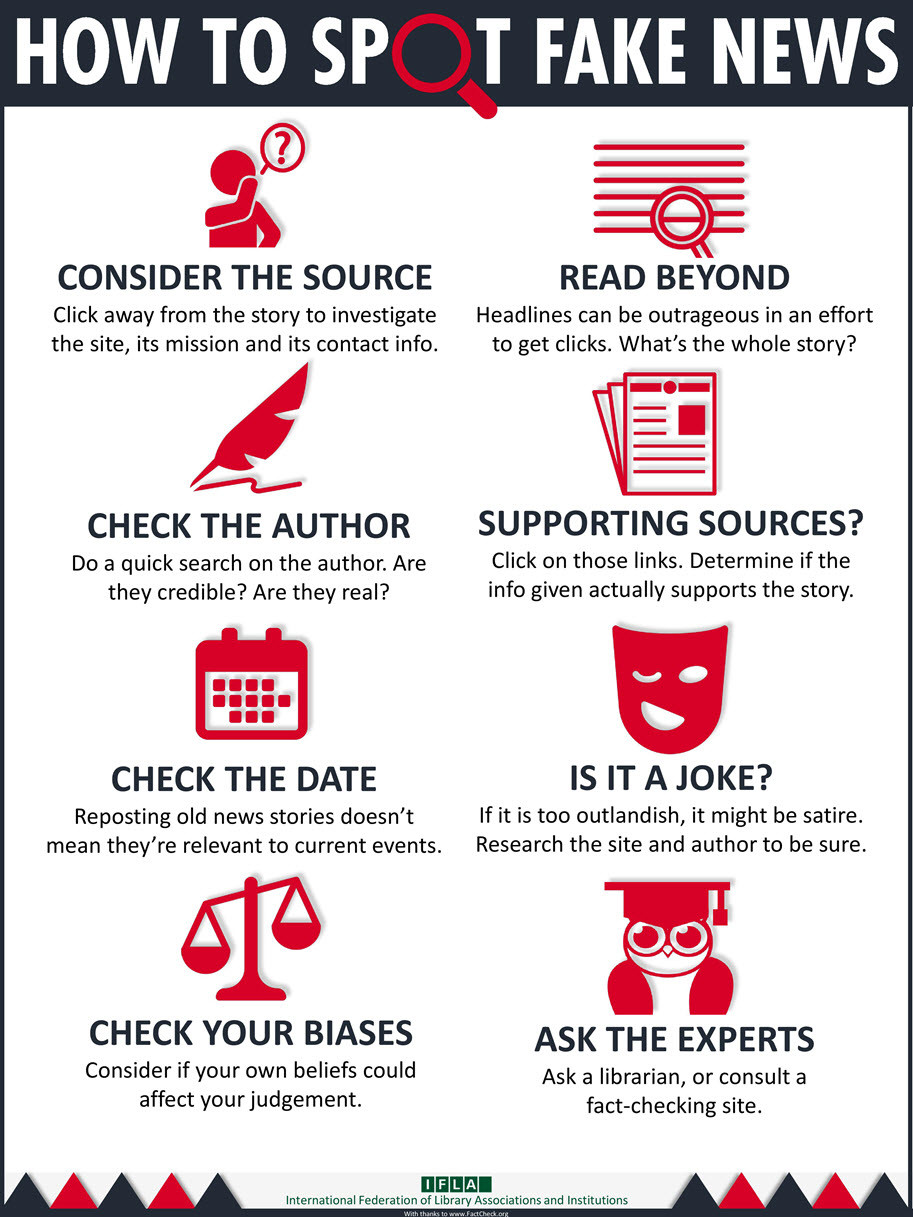
Fake news can be hard to recognize, especially if it’s meant to look like reliable news. Here are some clues:
- Suspicious Sources: Is the information from a well-known and credible source?
Does it come from a source known for spreading sensational or exaggerated news? - Exaggerated Headlines: “Shocking!” or “Unbelievable!” headlines often try to catch your attention, but they’re not always reliable.
- Emotionally Charged Language: Articles that try to make you angry or scared may be using emotion to influence you.
- Lack of Evidence: Reliable news stories will have sources or evidence to back up their claims.
If there’s no evidence, be cautious.
Source: Cornel University Library
Case Study:Consider a recent example from the region: rumours about miracle cures for COVID-19 circulated widely during the pandemic. Many posts on social media claimed that certain foods or supplements could “cure” COVID-19. Often, these claims were disinformation, created by individuals who wanted to sell certain products. Other times, they were misinformation, shared by people who believed in the cure without verifying it.
Practical Tools for Verifying Information
These simple techniques can help you check if information is trustworthy:
 1. Fact-Checking Websites:
- Sites like Faktograf (Croatia) or Raskrinkavanje (Serbia) are useful for verifying news stories and claims.
- Activity: Find a current story online and use one of these sites to check if it’s been verified. What do they say about it?
2. Reverse Image Search:
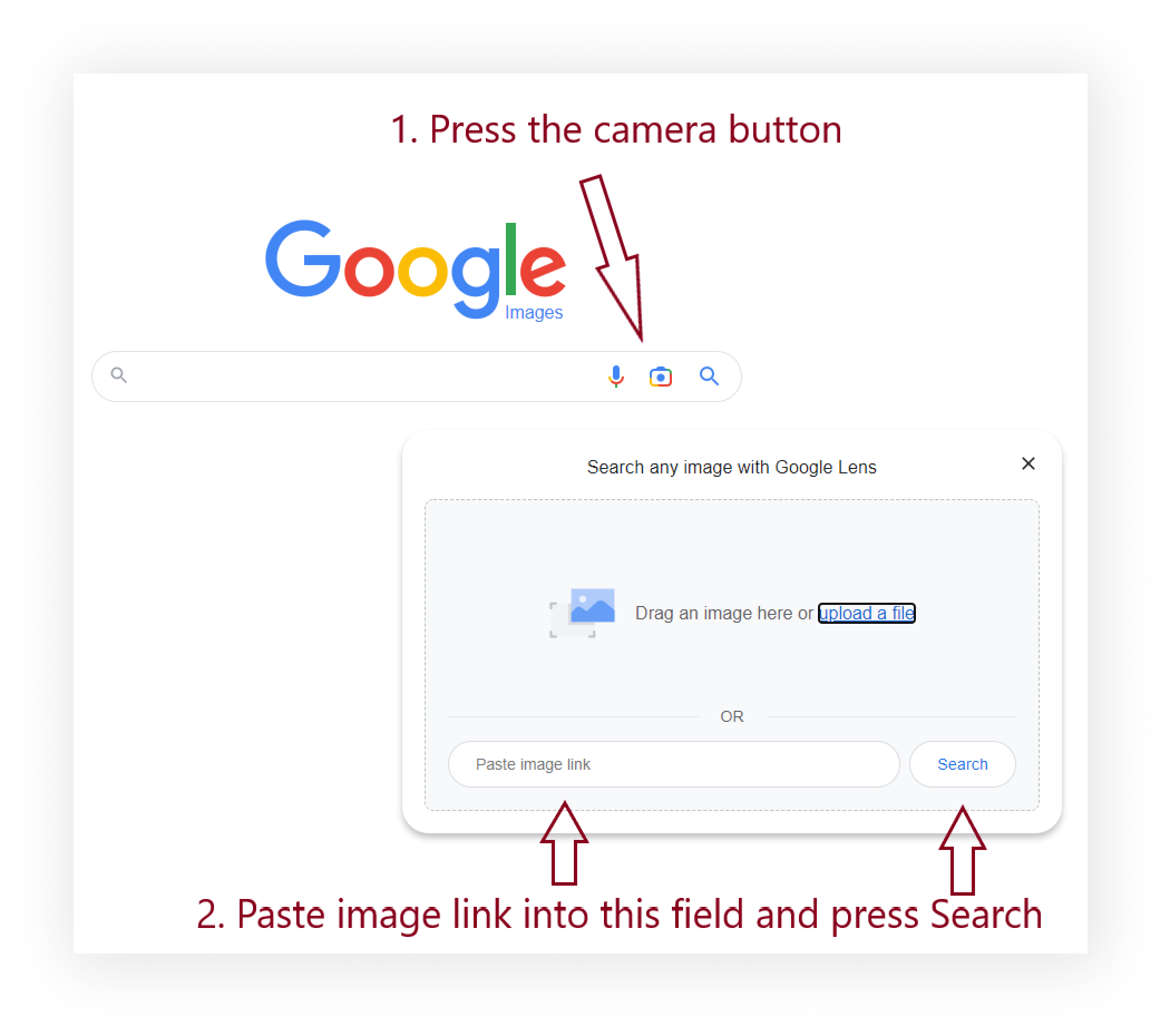
- Fake news often uses misleading images. You can use Google’s Reverse Image Search or TinEye to check if an image has been altered or used out of context.
- Activity: Search for an image you’ve seen in a news post or on social media. Where else does it appear? Is it from the same event, or has it been reused?
3. Source Verification:
- Look for the original source of a piece of information. If it can’t be traced back to a trustworthy source, it might not be reliable.
- Example: If a news story about a public figure has no official statement or link to a credible news outlet, be sceptical.
Final Checklist for Identifying Fake News
Before you believe or share any news online, ask yourself:
- Who is the source of this information?
- Is the headline trying to shock or scare me?
- Can I find this news on other reputable sites?
- Are there sources or evidence to back up the claims?
- Have I verified the information with a reliable fact-checking site?
Using these tools and tips can help you become a more critical and responsible consumer of information.This approach will help you spot fake news, understand the difference between disinformation and misinformation, and protect yourself from misleading information online. Remember, staying informed means staying critical!
-
Please find here the PowerPoint presentation for Lesson 6, entitled Navigating the Maze of Fake News.
-
-
Fake News/Misinformation/Disinformation: How can you identify Fake News? – The Northeastern University Library guide outlines the SIFT method - Stop, Investigate the source, Find better coverage, Trace claims - to help individuals critically evaluate and identify fake news.
- Knowledge Is Power: Fighting Misinformation, Disinformation, and Junk News – The Washington University in St. Louis guide on spotting fake news provides strategies such as verifying authors' credentials, scrutinizing URLs for authenticity, being cautious of sensational headlines, cross-referencing information with multiple sources, and using reverse image searches to assess the credibility of news content.
- Hot Topics: Fake News and Misinformation – The University of Maine in Augusta's guide on identifying fake news provides browser extensions and fact-checking resources to help users discern misinformation online.
- Validity, Credibility, Reliability – The Stanford Law School guide on "Checking your Sources" emphasizes evaluating the validity, credibility, and reliability of research materials by employing methods like the 5W's, C.R.A.A.P., RADAR, and SIFT, while also considering the context and potential biases of each source.
-
-
-
-
-
Introduction
In today’s fast-paced digital world, misinformation and disinformation spread very fast, making it crucial to develop skills in fact-checking and information verification. The ability to critically go through news and data is essential for everyone, from journalists and educators to everyday users of media. Fact-checking and verification tools will explore key tools and resources, effective techniques for verifying sources and common pitfalls to avoid when doing fact-checking.
Tools and resources for fact-checking
Various tools and platforms have been developed to help with fact-checking, many of which are freely accessible. These resources are designed to verify the authenticity of news, images and other media:
Google Fact Check Explorer: This tool compiles fact-checks from reputable sources across the web, allowing users to search for claims and see how they have been evaluated.
Snopes: One of the most well-known fact-checking websites, Snopes specializes in debunking myths, urban legends and viral information.
PolitiFact: PolitiFact provides detailed fact-checking on political statements, grading them on a "Truth-O-Meter" to show how accurate they are.
FactCheck.org: A non-partisan, non-profit organization that provides in-depth analysis and debunks false political and public policy claims.
TinEye: A reverse image search tool that helps verify the origin of an image, which can be useful in identifying manipulated or out-of-context visuals.
InVID: A browser extension that helps verify videos and images from social media by checking for manipulation, original sources and whether the media is misleading.
These tools are essential in combating false information and helping people stay informed with facts. Familiarity with these platforms enables users to perform quick fact-checks before sharing or relying on information.

Techniques for verifying sources and informationIn addition to using specific tools, there are several techniques that can enhance the factchecking process. These techniques can be applied to text, images, videos and other forms of media:
Cross-referencing with reputable sources
Always verify a claim by consulting multiple trustworthy sources. Reliable sources include established news outlets, highly reviewed journals and official reports from reputable organizations. For example, if you encounter a claim about a new medical discovery, consult websites like the World Health Organization or PubMed to confirm the legitimacy of the information.
Reverse image search
Images are often misused or taken out of context to mislead viewers. By using tools like Google reverse image search, you can trace an image back to its original source and determine whether it has been altered or changed to exhibit false information.
Check metadata
For verifying videos or images, checking the metadata (information like location, time and date of creation) can help. FotoForensics, for instance, can analyze image metadata to detect potential changes.

Assessing source bias and credibility
Understanding the bias or reputation of a source is vital. Websites like Media Bias/Fact Check provide an analysis of a source’s political leaning, factual reporting record and transparency. This allows you to see whether a source is likely to present information accurately or was it changed due to bias.
Common pitfalls in fact-checking
While fact-checking is an invaluable skill, there are several common mistakes people make when verifying information. Understanding these pitfalls can help ensure more accurate assessments:
Confirmation bias
People often seek out information that supports their pre-existing beliefs, a phenomenon known as confirmation bias. To avoid this, actively search for opposing viewpoints and challenge your assumptions.
Over-reliance on one source
Relying on a single source for fact-checking, even if reputable, can lead to incomplete or wrong results. Always check information with multiple sources to ensure its accuracy.
Misinterpretation of satire or parody
Satirical news websites like The Onion or The Borowitz Report often produce exaggerated or fabricated stories for comedic purposes. Fact-checkers should be aware of these sources to avoid misinterpreting satire as legitimate news.
Ignoring context
Even factual information can be misleading if taken out of context. Always consider the broader context in which a statement or statistic is made. For instance, a report on crime rates might sound alarming, but it’s important to check over what time frame and under what circumstances those rates were recorded.
In the 21st century where information is increasingly accessible yet frequently unreliable, the importance of fact-checking and verification cannot be overseen. By utilizing the right tools, applying critical techniques and being aware of common pitfalls, individuals can develop strong fact-checking skills. These skills not only help in debunking fake information but also contribute to a more informed and discerning society.
-
Please find here the PowerPoint presentation for Lesson 7, entitled Fact-checking and Verification Tools.
-
- Websites for Fact-Checking – this Research Guide is loosely adapted from a guide developed by the Research Center at the CUNY Graduate School of Journalism.
- Tools That Fight Disinformation Online – The RAND Corporation's "Tools That Fight Disinformation Online" page provides a searchable database of 82 tools designed to combat online disinformation, including bot detection, credibility scoring, and educational resources.
- Google News Initiative – The Google News Initiative is a global effort by Google aimed at supporting journalism and combatting the spread of misinformation. It provides resources, tools, and funding to support news organizations, improve media literacy, and promote the development of high-quality journalism.
-
Practise your knowledge about fact checking and verification tools with this short, 10-question quiz.
-
-
-
Introduction
In recent years, artificial intelligence (AI) has made huge progress in the field of visual content creation. AI-generated images and videos have become increasingly sophisticated, blurring the lines between human-created and machine-created content. To date, some AI created images have won a major photo competition, fake political AI video shared by Elon Musk got over 130 million views etc, AI can be created in someone’s voice such as Scarlet Johansson or even videos to scam people like Elon Musk’s case. This lesson explores the process behind AI image and video generation, notable examples of this technology in action, and methods for distinguishing between authentic and AI-generated content.
Notable cases of AI generated visual media
Here are four notable cases of fake AI images and videos, along with links to articles discussing them:

AI generated image “Pseudomnesia: The Electrician”
won the Sony World Photography Competition- The Tom Cruise DeepFake TikTok Videos (2021)
A series of videos appeared on TikTok featuring a hyper-realistic deepfake of actor Tom Cruise. These videos showcased the advanced state of deepfake technology and raised concerns about the potential for misuse. - The "This Person Does Not Exist" Website
While not a specific case, this website generates a new AI-created face every time you refresh the page, demonstrating how AI can create highly realistic images of people who don't actually exist. - AI-Generated Art Wins Competition (2022)
An AI-generated artwork won first place in a fine arts competition at the Colorado State Fair, sparking debate about the nature of art and creativity in the age of AI. - Fake Kamala Harris campaign video (2024)
In mid-2024, a fake, AI made allegedly campaign video of the USA presidential election candidate Kamala Harris appeared, attracting 130 million views only from Elon Musk’s posting it without clearly stating that it is a fake.
These cases demonstrate the wide-ranging impact of AI-generated images and videos across various fields, from entertainment and art to journalism and politics. They underscore the importance of developing robust methods for detecting AI-generated content and considering the ethical implications of this technology. They also demonstrate the potential for such technology to be used for misinformation or manipulation in political discourse.
Debunking AI-Generated Content
As AI-generated content becomes more prevalent, it’s crucial to develop skills for identifying synthetic media. Here are some elements that you should check:
- Inconsistencies in Details:
- Look for irregularities in facial features, such as asymmetrical eyes or oddly shaped teeth.
- Check for inconsistencies in backgrounds or lighting that don't follow natural physics.
- Analyzing Metadata:
- Examine the image or video file’s metadata for information about its origin and editing history.
- Examine the image or video file’s metadata for information about its origin and editing history.
- Digital Forensics Tools:
- Use specialized software designed to detect manipulated or AI-generated content.
- Contextual Analysis:
- Consider the source and context of the content. Is it from a reputable source? Does it align with known facts?
- AI Detection Models:
- Employ AI-powered tools specifically trained to identify AI-generated content.
- Employ AI-powered tools specifically trained to identify AI-generated content.
Online Sources for Verification
Several online resources can help in verifying the authenticity of images and videos:
- TinEye: A reverse image search engine that can help find the original source of an image.
- Google Reverse Image Search: similar to TinEye, it can trace the origin and usage of images across the web.
- FotoForensics: Provides tools for analyzing the digital makeup of images to detect alterations.
- InVID Verification Plugin: A browser extension that offers various tools for verifying videos and images.
- Sensity: Specializes in deepfake detection and provides resources for identifying AI-generated videos.
 Illustration
Photo below is an AI created image of Gorge Clooney and Wolfgang Amadeus Mozart allegedly drinking vanilla milkshake together at Schönbrunn Palace in Vienna. Below is also a link to a fake YouTube video about the same “event”. Both are AI created content for educational purposes to serve as an illustration of AI creative abilities. Clooney and Mozart of course never met as Mozart (1757-1791) died 170 years before Clooney was born (1961)!
Notable AI tools
- DALL-E 2 by OpenAI is known for creating highly detailed and creative images from text descriptions.
- Midjourney has gained popularity for its artistic renderings and ability to create images in various styles.
- Stable Diffusion - an open-source model that has democratized AI image generation.
- This Person Does Not Exist - A website showcasing AI-generated faces that are indistinguishable from real photographs.
- DeepFake Videos - While there isn't a single source, the term "deepfake" has become widely known. A famous example is the deepfake video of Tom Cruise on TikTok. Here-s an article about the Tom Cruise deepfake.
Remember, the field of AI-generated content is rapidly evolving, so new and more advanced examples are continually emerging. It's always a good idea to check the most recent sources for the latest developments in this field.
Ethical Considerations and Future Implications
The rise of AI-generated content raises important ethical questions:
- Copyright and Ownership: Who owns the rights to AI-generated content?
- Misinformation: How can we prevent the spread of fake news and manipulated media?
- Privacy Concerns: What are the implications of creating realistic images or videos of real people without their consent?
- Creative Industry Impact: How will AI-generated content affect artists, photographers, and other creative professionals?
As technology continues to advance, it’s likely that AI-generated content will become even more sophisticated and widespread. This underscores the importance of developing critical thinking skills and leveraging technological tools to navigate the increasingly complex digital landscape.Conclusion
AI-generated images and videos represent a fascinating intersection of technology and creativity. While they offer exciting possibilities for art, entertainment, and innovation, they also present challenges in terms of authenticity and ethical use. By understanding how this content is created and learning to critically evaluate digital media, we can better appreciate the capabilities of AI while remaining vigilant against potential misuse.
- The Tom Cruise DeepFake TikTok Videos (2021)
-
Please find here the PowerPoint presentation for Lesson 8, entitled AI-Generated Images and Videos.
-
Several online resources can help in verifying the authenticity of images and videos:
- TinEye – a reverse image search engine that can help find the original source of an image.
- Google Reverse Image Search – similar to TinEye, it can trace the origin and usage of images across the web.
- FotoForensics – a reverse image search engine that can help find the original source of an image.
- Sensity– specializes in deepfake detection and provides resources for identifying AI-generated videos.
-
Practise your knowledge about AI fake images and videos by taking this short, 10 questions quiz.

-
-
-
Introduction
Youth activism has been a powerful force for social change throughout history, and in the modern era, it has taken on new forms with the advent of digital technology. This lesson provides a brief definition of youth activism, its main forms, key recent examples, its challenges, especially regarding recent technology and social networks, and its overall importance in society. In addition, the lesson discusses the findings from the latest ADMe group research in Vienna showing that social media enhances informed decision-making only for individuals with well-developed political awareness, critical thinking, and prior mastery of traditional media and research skills. In conclusion, while social media offers vast opportunities for youth activism, its role is dual-edged. The lesson concludes with the discussion whether social media activism can deepen or impede our political and informational awareness, and how to use its full potential through mastering not only new technologies, but also critical media literacy and active engagement.
Youth Activism: A Definition and Its Impact
Youth activism is the active participation of young people in efforts to promote social change. It spans a wide range of activities, including protests, advocacy campaigns, raising awareness, civic engagement, and volunteering. While often associated with public demonstrations, youth activism also includes subtler forms of involvement like education initiatives and skill-building for civic participation. The definition has evolved over time to encompass diverse approaches to fostering active citizenship.
Youth activism is vital for societal progress. Young people bring fresh perspectives, energy, and commitment to addressing social issues. Their involvement helps shape future leadership and sustains democratic participation. As scholar Ron Kassimir highlights, the condition of youth directly influences society’s aspirations and challenges, underscoring the significance of their activism.
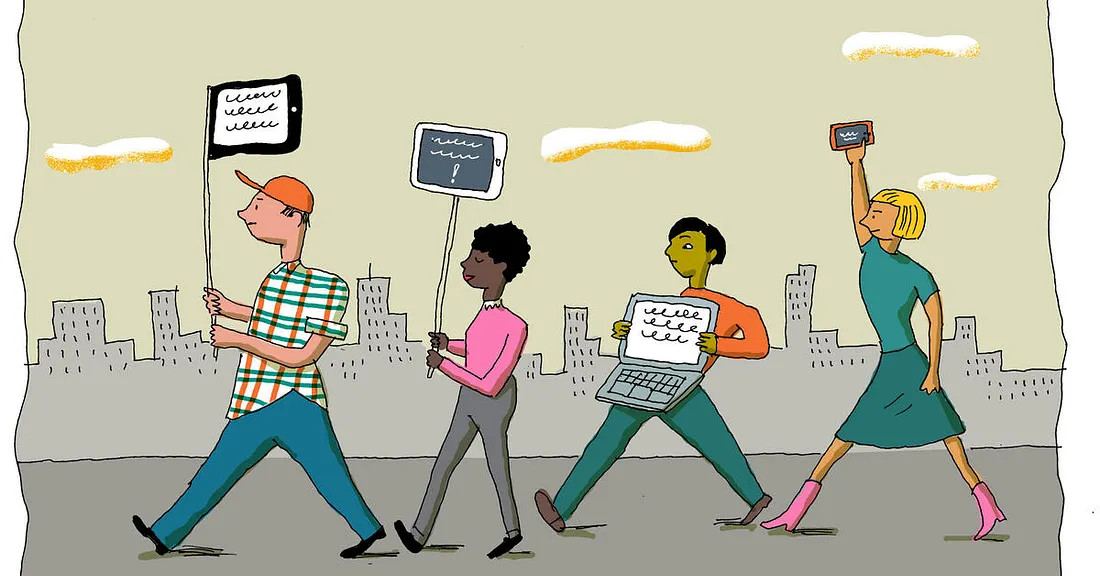
The digital age has transformed youth activism by providing new tools for engagement, such as social media. However, it also presents challenges like sustaining long-term commitment, addressing the digital divide, and countering government surveillance. Despite these obstacles, young activists continue to harness digital platforms to amplify their voices and drive change.
As future leaders, it is essential for young people to embrace activism, recognizing its potential to address 21st-century challenges and shape a better world for their communities and beyond.
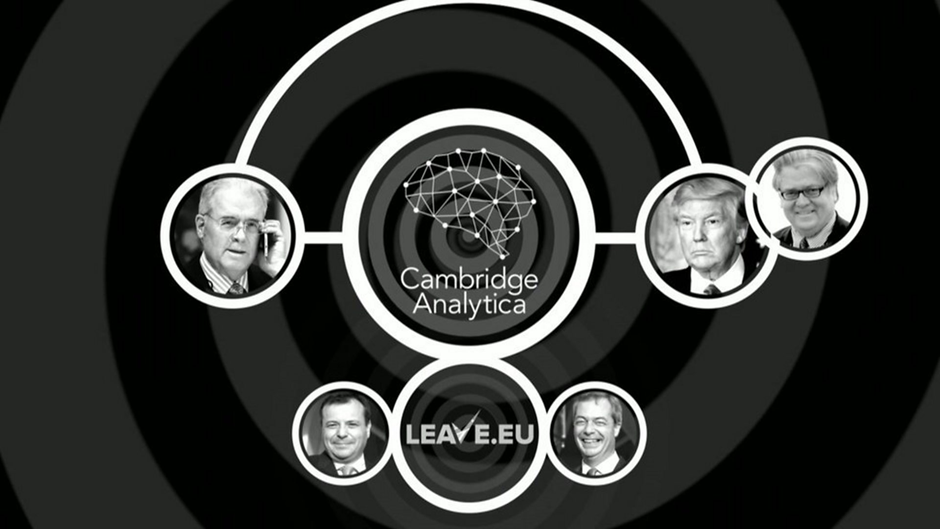
The Influence of Social Media on Shaping Our WorldSocial media significantly shapes our world, a claim well-supported by real-life events in the UK and the US—Brexit and Donald Trump’s electoral victories. These examples demonstrate how social media platforms have become crucial tools for influencing public opinion and political outcomes. Cambridge Analytica played a crucial role in both the Brexit referendum and Donald Trump’s election by leveraging Facebook data to target undecided or disengaged voters through highly personalized online campaigns. Their strategies mobilized passive individuals in Brexit and suppressed potential votes for Hillary Clinton in the U.S., significantly influencing both outcomes.
Source: BBC.
More information about this case is provided in a short video produced by the BBC
More recently, the role of social media in shaping political narratives was evident in Elon Musk’s involvement during the latest elections. Using his platform, X (formerly Twitter), Musk amplified misinformation, including a falsified video about Kamala Harris, which garnered between 120 and 130 million views. While Musk claimed to have simply reposted the video, he failed to clearly label it as fake, leaving many viewers unaware of its inaccuracy.These cases highlight the immense power of social media in influencing decisions on contentious issues. However, this does not imply that society has entered an Orwellian dystopia where opinions are effortlessly manipulated. Deeply held beliefs, such as opposition to capital punishment or preference for democratic systems, remain resistant to external influence. Yet, for undecided or controversial topics—such as voting preferences or public health policies—social media provides a vast arena for political manipulation.
The conclusion is clear: social media plays a significant role in shaping public opinion and political landscapes, even in well-established democracies. This raises critical questions about the ethical use of such platforms and the need for safeguards to protect public discourse from undue manipulation.
Youth Activism and Social Media
The widespread adoption of social media is a recent phenomenon, with platforms like Facebook, YouTube, and TikTok emerging within the last two decades. Understanding their long-term effects requires time, but some patterns are already evident.
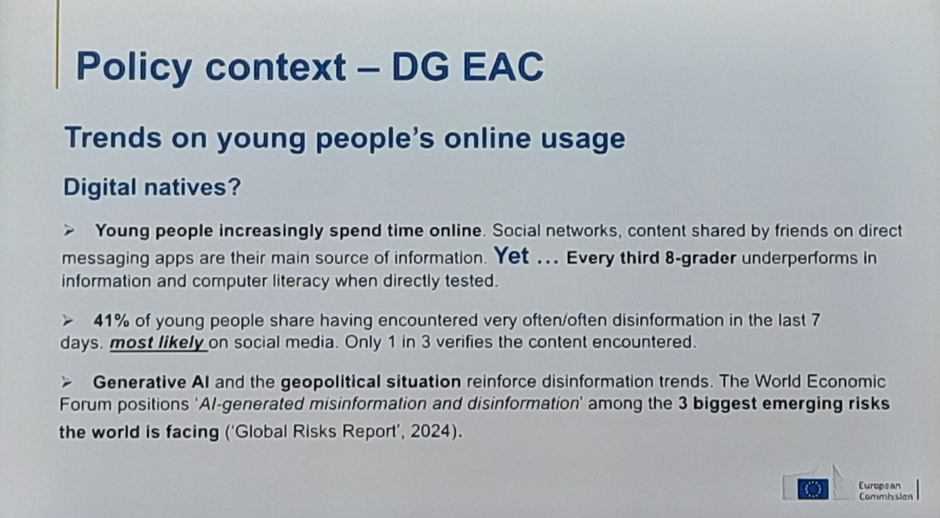
A report from the European Commission highlights that young people now spend significant time online, relying on social media, particularly private messaging platforms like Instagram and Messenger, as their primary news source. However, over 40% of youth encounter fake news daily, with few verifying the accuracy of such information. Many lack media literacy, making them susceptible to misinformation and manipulation.
This trend has led some to predict dystopian outcomes: a society of politically apathetic, easily manipulated individuals controlled by elites using technology. Historical comparisons highlight the contrast with past eras of youth activism, such as the civil rights movements or anti-war protests of the 1960s. Critics argue today’s youth are more self-centered and less civically engaged.Others challenge this view, suggesting youth activism has evolved. Instead of traditional participation, young people engage through social media, volunteer work, and non-traditional movements. Platforms like Facebook and Twitter offer tools for activism, but sustaining long-term engagement remains a challenge. While a minority leverage social media to enhance political awareness, most fall into entertainment-focused or passive usage, limiting its positive impact.
Social media platforms have become vital tools for youth activism, offering unprecedented opportunities for civic engagement and political mobilization. However, their effectiveness remains debated. Studies reveal that young people use platforms like Facebook and Twitter to facilitate activism, yet maintaining long-term engagement and motivation proves challenging.
Facebook and Twitter play distinct roles in activism. Facebook often serves as a hub for creating groups focused on specific causes. However, sustaining the interest of members over time remains difficult. Twitter, by contrast, promotes broader interaction with users discussing a variety of topics. This dynamic fosters momentary engagement but does not always translate into tangible change, often limiting activism to symbolic or superficial levels.
The Arab Spring is a prominent example of how social media can drive youth activism. Beginning in 2010, this wave of protests and revolutions reshaped the Middle East. Young activists used platforms like Facebook, Twitter, and YouTube to organize demonstrations, raise awareness, and exchange information in countries such as Tunisia and Egypt. These platforms circumvented state censorship, enabling mass mobilization. Attempts by governments to block internet access—such as Tunisia's website restrictions and Egypt's five-day internet blackout—only strengthened the resolve of protestors.
Despite this potential, social media use has significant limitations. Research from the ADMe group in Vienna highlights that most young people use social media primarily for entertainment, with fewer engaging with political content. Politically active users often already possess a developed sense of political awareness. In contrast, most youths without such a foundation fall victim to algorithms that create "filter bubbles," restricting them to narrow, repetitive, and often biased information.
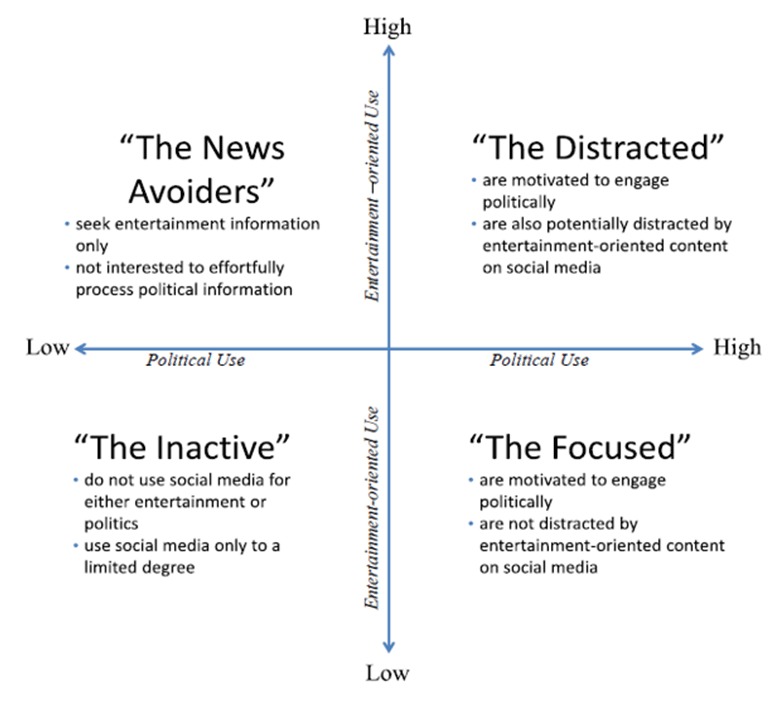
A typology of users based on the two dimensions entertainment-oriented use and political use of social media
This phenomenon complicates the development of critical thinking among young users. Instead of fostering informed engagement, social media often contributes to superficial understanding and the spread of misinformation. Only those equipped with skills to critically analyze and seek out diverse sources of information can harness social media for meaningful learning. For others, these platforms can lead to intellectual stagnation, reinforcing simplistic views and discouraging deeper political awareness.
The overall impact of social media on youth activism is thus mixed. While these tools have the potential to transform engagement, their effectiveness largely depends on the user's prior knowledge and skills. The analogy of a Hilti screwdriver aptly illustrates this dynamic: a powerful tool can only be effective if the user knows how to operate it. For the majority of young people, who lack adequate "training" or experience, social media often serves as an obstacle rather than an enabler of political empowerment.
In conclusion, while social media offers vast opportunities for youth activism, its role is dual-edged. It can either deepen political and informational awareness for a minority of informed users or contribute to intellectual insularity and superficiality for the majority. Harnessing its full potential requires not only access to technology but also critical media literacy and active engagement with diverse perspectives.
-
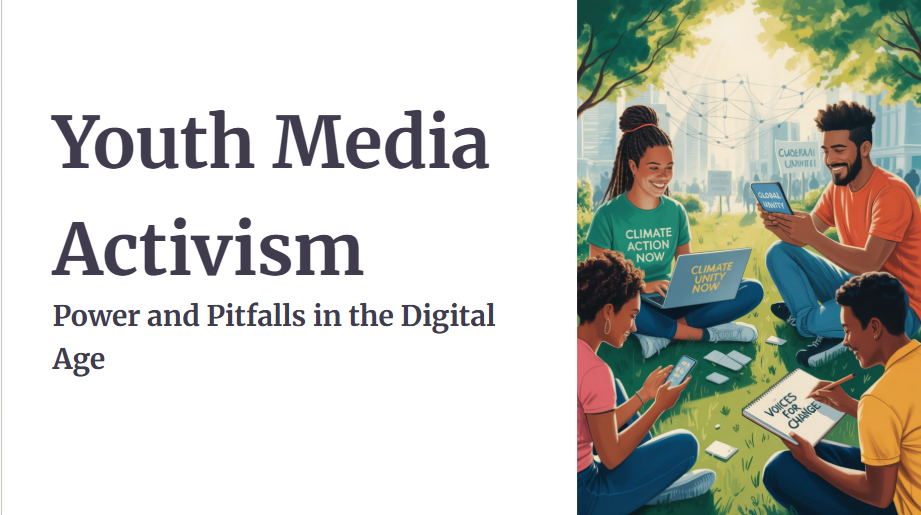
Please find here the PowerPoint presentation for Lesson 9, entitled Youth Media Activism.
-
Here are a few relevant examples of Youth Media Activism with links to concrete examples of how youth have utilized media, particularly social media, for activism in recent years:
- Arab Spring and Social Media – an overview of how social media was used during the Arab Spring uprisings.
- Occupy Wall Street Movement – a Guardian article explaining how young activists used social media to organize and spread the Occupy movement.
- Black Lives Matter – an article from the Pew Research Center website discussing how youth activists have used social media to amplify the Black Lives Matter movement.
- Climate Change Activism – explores how young activists like Greta Thunberg have used social media to raise awareness about climate change.
- #MeToo Movement – examines the role of social media in spreading the #MeToo movement, which was largely driven by young activists.
-
Practice your knowledge about Youth Media Activism by taking this short, 10-question quiz.
-
-
-
Introduction
Critical thinking is an essential skill for media literacy – and generally distinguishing the truth – that involves the ability to analyze information, evaluate evidence, and form reasoned conclusions. Thereby, it is essential in a technocratic society such as ours where there are so many information and it is difficult to know which ones are false and which are true; it is also a fundamental skill in a democratic society, which should strive at providing balanced arguments to its members and enable them to make informed decisions – thereby applying reasoning, choices, decisions and conclusions. It is a disciplined process that requires active engagement with ideas, allowing individuals to think clearly and rationally about what to believe or do. This text explores the origins of critical thinking, significant figures who have contributed to its development, practical applications, and its critical role in society.
Origins of Critical Thinking: Socrates, the Midwife of Critical Thinking
The roots of critical thinking can be traced back to ancient civilizations, particularly in Greece. Ancient Greeks lived in separate city-states called polis, and we can say that critical thinking was born in one of them, in ancient Athens, from 5th to 3rd century BCE. Philosophers like Socrates, Plato, and Aristotle laid the groundwork for systematic inquiry and rational thought. Socrates – the teacher of Plato, who in turn taught Aristotle – could be credited as the father of the critical thinking.
Namely, before Socrates, ancient Greeks sought truths about the world from their poets or prophets, such as Homer, generally believing that they are the ones who hold the keys to knowledge and are inspired by divinity. Socrates claimed that truth is not poetic, symbolic or abstract, but that it can be reached through a rational conversation where, thorough a dialogue involving questions and answers, we gradually narrow the subject down to its most essential notion – the truth. In other words, Socrates claimed that he does not know the truth beforehand, but that he develped a model of rational reasoning, which he called Socrates called the “midwife method,” probably because he was the son of a midwife. He believed that the truth was already in a person's mind, and it was only necessary to extract it from there and help it be born. This is known as the Socratic Method – a form of cooperative argumentative dialogue that stimulates critical thinking by asking and answering questions to stimulate deeper thought and insight. This method emphasizes the importance of questioning assumptions and seeking clarity.
While Socrates did not write anything himself, we know of his teachings through his disciple Plato, as Socrates is the main character in several of his dialogues. In one of those, called Theaetetus (4. C. BCE), Socrates describes his midwifery method as follows:
Well, my art of midwifery is in most respects like theirs; but differs, in that I attend men and not women, and I look after their souls when they are in labour, and not after their bodies: and the triumph of my art is in thoroughly examining whether the thought which the mind of the young man brings forth is false and lifeless, or fertile and true. And again I resemble the midwives in being barren of wisdom, and the reproach which is often made against me, that I ask questions of others and have not the wit to pronounce upon any subject myself, is very just--the reason is, that the god compels me to be a midwife, but has not allowed me to bring forth. I myself, then, am not particularly wise, nor have I anything to show which is the invention or birth of my own soul. But of those who converse with me, some at first appear utterly stupid; and all, as our acquaintance ripens, if the god is gracious to them, make astonishing progress; and this in the opinion of others as well as in their own. It is quite clear that they never learned anything from me; the many fine discoveries to which they give birth are of their own making. But to me and the god they owe their delivery.
(Theatetus 150b-150d, p 244)
During the Renaissance, the emphasis on humanism fostered further development of critical thinking. Thinkers like Descartes and Locke introduced ideas of skepticism and empiricism, encouraging individuals to question accepted truths and seek knowledge through observation and reason. The Enlightenment period saw the emergence of rationalism and scientific inquiry, which further promoted critical thinking as a foundation for knowledge.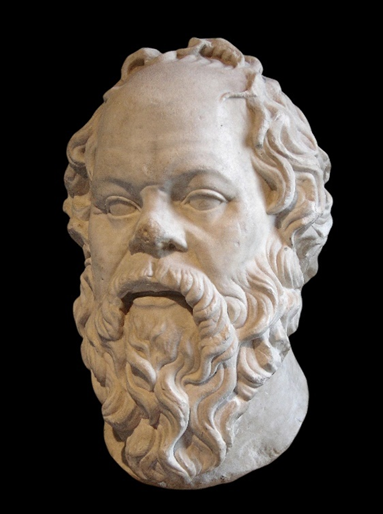
Marble head of Socrates in the Louvre (1st century)
In the 20th century, John Dewey advocated for experiential education and reflective thinking, stressing the importance of critical thinking in problem-solving and decision-making. Dewey argued that critical thinking is crucial for effective citizenship and personal development.
Nowadays, figures such as Edward de Bono have contributed to the understanding of creative and lateral thinking by highlighting the necessity of thinking beyond traditional logic to solve complex problems. Additionally, thinkers like Daniel Kahneman and Richard Thaler have examined cognitive biases and decision-making processes, clarifying the psychological aspects of critical thinking.
Practical Applications of Critical Thinking
Critical thinking is applicable in various contexts, including education, business, healthcare, and everyday life. In education, critical thinking skills enable students to analyze texts, assess arguments, and develop their perspectives on complex issues. For instance, students might critique a historical event by examining multiple viewpoints, considering the evidence, and formulating their conclusions.
In the business realm, critical thinking is essential for strategic planning and problem-solving. Leaders utilize critical thinking to evaluate market trends, assess risks, and make informed decisions that drive organizational success. For example, a company facing declining sales may use critical thinking to analyze customer feedback, identify underlying issues, and develop effective marketing strategies.
In healthcare, critical thinking is vital for diagnosis and treatment planning. Medical professionals must evaluate symptoms, consider various possible conditions, and determine the best course of action. For instance, a doctor might analyze a patient’s medical history, conduct tests, and weigh the benefits and risks of different treatments before making a recommendation.
Political Role of Critical Thinking in SocietyCritical thinking plays a pivotal role in fostering informed and engaged citizens. In a democratic society, it is crucial for individuals to evaluate information critically, especially in the age of misinformation and rapid technological advancement. Critical thinking empowers citizens to discern credible sources, analyze political arguments, and make informed choices during elections.
Moreover, critical thinking contributes to social progress by encouraging dialogue and understanding. It fosters an environment where diverse perspectives are valued, allowing for collaborative problem-solving. For example, community organizations often rely on critical thinking to address social issues, engaging stakeholders in discussions that lead to effective solutions.
Games and Activities to Enhance Critical Thinking Chess.com – Free online platform for playing chess that enhances strategic thinking, foresight, and planning. Chess.com is a website dedicated to chess and the millions of chess players around the globe who love the game. It is a place to show who you are, share what you think, improve your chess game, and enjoy every aspect of chess!
 The Talos Principle is a payable philosophical first-person puzzle game set in a contradictory world of ancient ruins and advanced technology. Tasked by your creator with solving a series of increasingly complex puzzles, you must decide whether to have faith, or to ask the difficult questions: Who are you? What is your purpose And what are you going to do about it?
 Spent is an online game about poverty and homelessness. It was developed by advertising agency McKinney for their pro bono client Urban Ministries of Durham, a nonprofit organization in Durham, North Carolina that provides services to those in poverty.
Spent is based on the concept of budgeting and the various challenges one has to face in day-to-day life. While playing the game, the player will face multiple difficult scenarios and has to make crucial decisions that will directly impact their income (in the game).
 Numberdyslexia.com offers a nice collection of online games to improve your critical thinking skills, including the classical ones such as Sudoku, Tangram etc.
 Brainstorm - Critical thinking is all about making decisions based on analytical observation and this game allows individuals to Brainstormand find answers to challenging questions. A maximum of four players can join and compete with each other to complete small tasks and objectives ahead of every other player. The players would need to push their brains to their limits which means that this game will stimulate their brains and let them exercise critical thinking skills.
ConclusionIn conclusion, critical thinking is a vital skill with deep historical roots and significant implications for personal development and societal progress. By understanding its origins, recognizing influential thinkers, and applying it in various contexts, individuals can enhance their ability to think critically and contribute meaningfully to their communities. Engaging in exercises designed to foster critical thinking will further empower students and citizens alike to navigate the complexities of modern life.
-
Please find here the PowerPoint presentation for Lesson 10, entitled What is Critical Thinking?
-
- 16 Best Free Online Critical Thinking Courses – from various universities around the world.
- Thinking Fast and Slow, by Daniel Kahneman
- Argument Wars (iCivics) – a game that engages players in crafting arguments for real Supreme Court cases.
- Top 10 Online Resources to Improve Your Critical Thinking Skills!
-
Practise your knowledge about Critical Thinking by taking this short, 10-question quiz.
-
-
-
IntroductionCritical thinking is a fundamental skill essential for success in academic pursuits and professional life. This chapter explores various tools and techniques that can significantly improve your critical thinking abilities, along with practical exercises and historical examples to illustrate their application.
Understanding Critical ThinkingCritical thinking involves the objective analysis and evaluation of information to form a judgment.
It encompasses skills such as:-
-
-
-
-
- Analysis
- Interpretation
- Inference
- Explanation
- Self-regulation
- Open-mindedness
-
-
-
-
Developing these skills enables you to make more informed decisions, solve complex problems, and engage in meaningful discourse across various disciplines.
Tools to Enhance Critical Thinking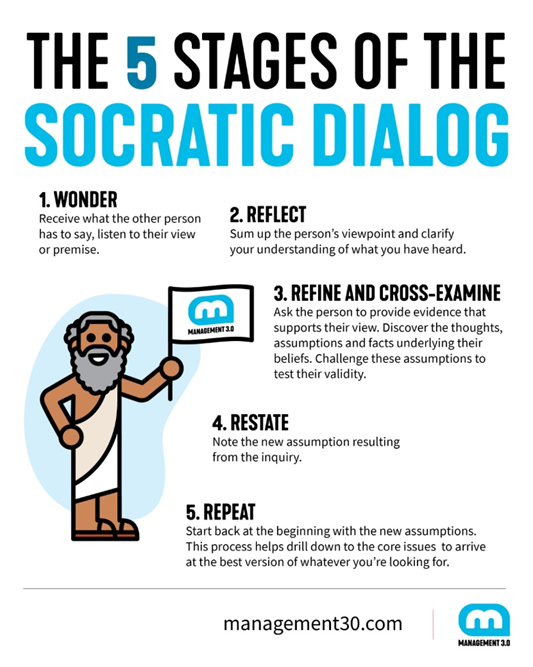
1. The Socratic Method
Named after the ancient Greek philosopher Socrates, this method involves asking probing questions to stimulate critical thinking and illuminate ideas. It encourages deeper exploration of assumptions and beliefs.
Historical Example: Socrates used this method in ancient Athens to challenge his students' beliefs and encourage them to question established norms, as documented in Plato's dialogues.
2. Mind Mapping
Mind mapping is a visual tool that helps organize and structure thoughts, revealing connections between ideas and concepts.
Link: For an interactive mind mapping tool, visit MindMeister
3. SWOT Analysis
SWOT (Strengths, Weaknesses, Opportunities, Threats) analysis is a strategic planning technique used to evaluate a situation or proposal from multiple angles.
Historical Example: NASA used SWOT analysis in the 1960s to evaluate the feasibility of the Apollo moon landing program, helping them identify potential challenges and opportunities.
4. The Five Whys Technique
This iterative questioning technique helps identify the root cause of a problem by repeatedly asking "Why?"
Historical Example: Sakichi Toyoda, the founder of Toyota Industries, developed this technique in the 1930s to improve manufacturing processes.
5. Argument Mapping
Argument mapping is a visual representation of the structure of an argument, showing the relationships between claims, evidence, and objections.
Link: Explore argument mapping with Rationale
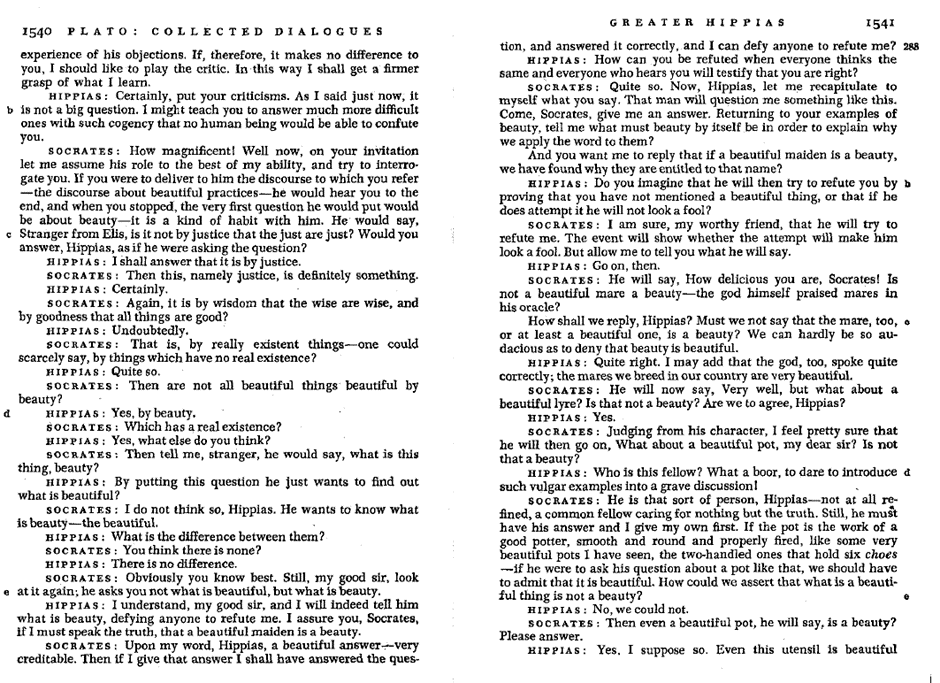
An excerpt from Plato's book On Beauty (4 C. BCE, full audio book)
illustrating the Socratic question/answer model
Applying Critical Thinking ToolsTo effectively use these tools, consider the following steps:
- Identify the problem or question at hand
- Gather relevant information from credible sources
- Apply appropriate critical thinking tools
- Analyze and evaluate the information
- Draw conclusions and make decisions
- Reflect on the process and outcomes
Historical Examples of Critical Thinking- The Scientific Revolution
In the 16th and 17th centuries, scientists like Galileo Galilei and Isaac Newton challenged long-held beliefs about the natural world through observation, experimentation, and logical reasoning. - The Enlightenment
Philosophers such as John Locke and Voltaire promoted rational thinking and skepticism of traditional authorities in the 18th century, influencing political and social reforms. - The Manhattan Project
During World War II, scientists and engineers applied critical thinking to solve complex problems in developing the atomic bomb, demonstrating the power of collaborative problem-solving.
Exercises to Strengthen Critical Thinking Skills
- Analyze Media
Choose a news article and identify potential biases, evaluate the credibility of sources, and distinguish between facts and opinions. - Solve Logic Puzzles
Regularly engage with logic puzzles and brain teasers to improve analytical and problem-solving skills. - Debate Club
Join or start a debate club to practice articulating arguments, considering multiple perspectives, and responding to counterarguments. - Interdisciplinary Studies
Explore connections between different academic disciplines to broaden your perspective and enhance your ability to think critically across various domains. - Reflective Journaling
Keep a journal to reflect on your thought processes, decision-making, and personal biases. This practice promotes self-awareness and metacognition.
Conclusion
Developing critical thinking skills is an ongoing process that requires practice and dedication. By incorporating these tools and exercises into your academic and personal life, you can enhance your ability to analyze information, solve problems, and make informed decisions. Remember that critical thinking is not just about finding the right answers, but also about asking the right questions and approaching challenges with an open and analytical mind.
As you continue to hone your critical thinking skills, you'll find that they become invaluable in navigating the complexities of academic studies, professional endeavors, and everyday life.
-
-
Please find here the PowerPoint presentation for Lesson 11, entitled Critical Thinking Skills & Tools.
-
Here's an annotated bibliography of 5 main references offering a mix of theoretical foundations, practical applications, and educational resources related to critical thinking skills and tools. They provide a solid starting point for anyone looking to deepen their understanding of critical thinking or incorporate these skills into their academic or professional life.
This seminal paper provides a comprehensive overview of critical thinking, its core skills, and its importance in education and daily life. Facione, a leading expert in the field, explores the cognitive skills and dispositions that constitute critical thinking, making it an essential resource for understanding the foundations of this crucial ability.
This concise guide offers a practical approach to understanding and applying critical thinking concepts. Paul and Elder present a framework for critical thinking that includes elements of thought, intellectual standards, and intellectual traits. The guide provides various tools and techniques for improving critical thinking skills, making it valuable for both students and educators.
This academic article proposes an integrated framework for critical thinking, synthesizing various theoretical approaches. The authors discuss the cognitive and metacognitive processes involved in critical thinking and suggest strategies for developing these skills. This paper is particularly useful for those interested in the theoretical underpinnings of critical thinking.
This concise guide offers a practical approach to understanding and applying critical thinking concepts. Paul and Elder present a framework for critical thinking that includes elements of thought, intellectual standards, and intellectual traits. The guide provides various tools and techniques for improving critical thinking skills, making it valuable for both students and educators.
This textbook provides a structured approach to developing critical thinking and problem-solving skills. It covers a wide range of topics, including analyzing arguments, assessing evidence, and making decisions. The book includes numerous exercises and real-world examples, making it an excellent resource for practical application of critical thinking tools.
-
Practise your knowledge about Critical Thinking Skills & Tools by taking this short, 10-question quiz.
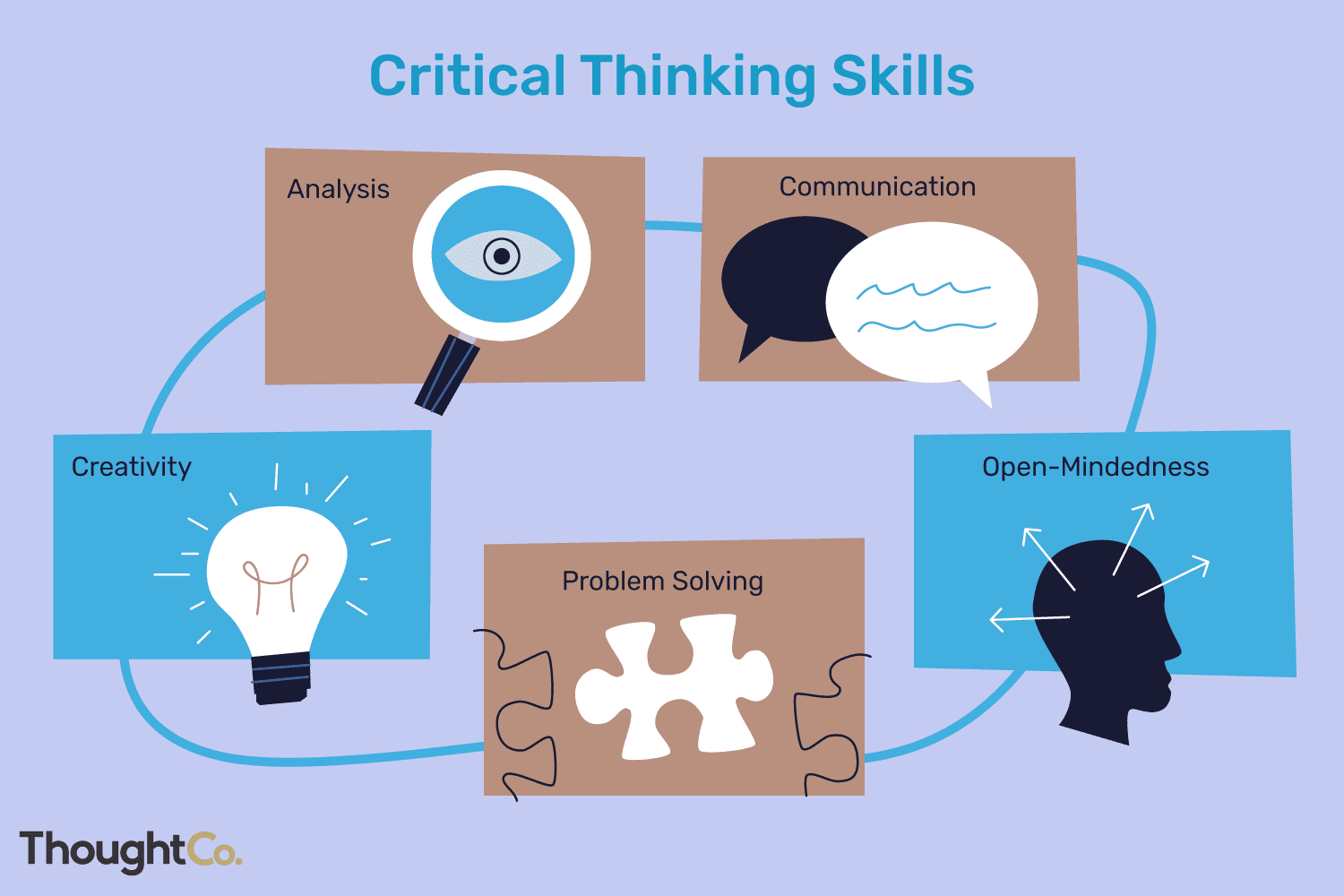
-
-
-
Introduction
Logical fallacies are errors in reasoning that undermine the validity of arguments, often making them appear persuasive while lacking logical foundation. They often appear convincing because they exploit emotional appeals, social biases, or flawed logic.
Understanding fallacies is a key component of critical thinking, as it equips individuals with the ability to evaluate arguments and distinguish sound reasoning from flawed logic. By identifying common fallacies like ad hominem attacks or straw man arguments, students can learn to navigate persuasive rhetoric and avoid being misled by faulty claims. Teaching logical fallacies fosters intellectual discipline, helping students question assumptions, seek evidence, and think independently. Moreover, it enhances their communication skills, enabling them to present their ideas clearly and defend them effectively against criticism.
In an era dominated by misinformation and polarized debates, recognizing fallacies empowers students to engage thoughtfully with complex issues and make informed decisions. This skill is not only critical for academic success but also essential for active participation in civic life. Teaching logical fallacies helps cultivate a generation of discerning, reflective, and responsible thinkers.
Common Logical Fallacies
- Straw Man Fallacy: Misrepresenting someone's argument to make it easier to attack.
Example: “You’re against space exploration? So you’re okay with ignoring scientific progress?” - Ad Hominem: Attacking the person instead of the argument.
Example: “You can’t trust their opinion on climate change - they didn’t even finish college!” - Slippery Slope: Assuming one step will inevitably lead to a negative chain of events.
Example: “If we allow one late submission, soon no one will follow deadlines.” - Appeal to Authority: Assuming something is true because an authority figure says so.
Example: “This product must be great—an athlete endorses it!” - False Dilemma (Either/Or Fallacy): Presenting only two options when more exist, forcing an oversimplified choice.
Example: “You’re either with us or against us.” - Bandwagon Fallacy: Assuming something is true or good because it is popular or widely accepted.
Example: “Everyone else is buying this product, so it must be the best.” - Red Herring: Introducing an irrelevant topic to divert attention from the original issue.
Example: “Why worry about climate change when there are people who don’t have enough to eat?” - Nirvana Fallacy: Rejecting a solution because it isn’t perfect, ignoring that it may still be effective.
Example: “Why bother with renewable energy? It can’t completely replace fossil fuels right away.” - Appeal to Novelty: Claiming something is better simply because it is new or innovative.
Example: “This new diet plan must work better - it was just developed this year!” - Post Hoc Ergo Propter Hoc (False Cause): Assuming that because one event followed another, it was caused by it.
Example: “I started wearing this bracelet, and now my grades are better - it must be lucky!” - Middle Ground Fallacy: Assuming the compromise between two positions must be correct, regardless of evidence.
Example: “Some say the Earth is flat, others say it’s round - the truth must be somewhere in between.” - Appeal to Tradition: Arguing something is better or correct because it’s always been done that way.
Example: “We’ve always held this event outdoors; we can’t change it now.” - Hasty Generalization: Drawing a conclusion based on insufficient or unrepresentative evidence.
Example: “I met two rude tourists from that country - everyone there must be rude.” - Circular Reasoning: Using the conclusion as a premise, assuming what you’re trying to prove.
Example: “I’m trustworthy because I always tell the truth, and you can trust me to say that.” - Appeal to Emotion: Using emotional appeals instead of logic to persuade.
Example: “Think of all the starving children - don’t you want to donate today?” - Begging the Question: Assuming the truth of the conclusion within the argument.
Example: “The law is good because it’s the law.” - Tu Quoque (You Too Fallacy): Dismissing criticism by pointing out the critic’s hypocrisy.
Example: “You say I shouldn’t text while driving, but I saw you do it last week!” - Equivocation: Using ambiguous language to mislead or misrepresent.
Example: “The sign says ‘Fine for Parking Here,’ so parking here must be fine!” - Appeal to Ignorance: Claiming something is true or false because it hasn’t been proven otherwise.
Example: “No one has proven aliens don’t exist, so they must be real.” - Composition Fallacy: Assuming what’s true of the parts must be true of the whole.
Example: “Each player on the team is excellent, so the team must be unbeatable.”
Sophisms and Paradoxes
Sophisms and paradoxes are, in essence, logical or intellectual puzzles and contradictions that have puzzled philosophers, logicians, and scientists throughout history. These are problems that create confusion and challenge conventional thinking.
The term paradox originates from Greek, combining para (contrary) and doxa (opinion or belief). A paradox is a statement or set of statements that lead to contradictions or defy intuition. Paradoxes stimulate critical thinking by exposing the limitations of human judgment and reasoning tools. Despite their perplexing nature, paradoxes have often catalyzed significant intellectual advancements. They have sometimes required the development of new mathematical principles or physical laws to resolve conclusions that initially seemed "obviously unacceptable."
The word sophism also has Greek origins, deriving from sophia (wisdom). However, sophism carries a negative connotation. It refers to a deceptive or specious argument crafted either to appear intellectually superior or to mislead others. Sophisms were crafted by the sophists in ancient Greece, whose name also stems from sophia. While sophists could be interpreted as "wise ones," their reputation for cunning and manipulation has given the term a less flattering meaning—akin to "intellectual tricksters." These individuals were intellectual magicians, employing rhetorical tricks and illusions to impress or deceive, akin to pulling rabbits out of hats in debates.
In summary, while paradoxes challenge intellect and intuition to push boundaries of knowledge and understanding, sophisms often exploit rhetoric and reasoning for less noble purposes, focusing more on appearances and persuasion than on genuine insight.
One of the early and well-known sophisms is the so-called Epimenides Paradox.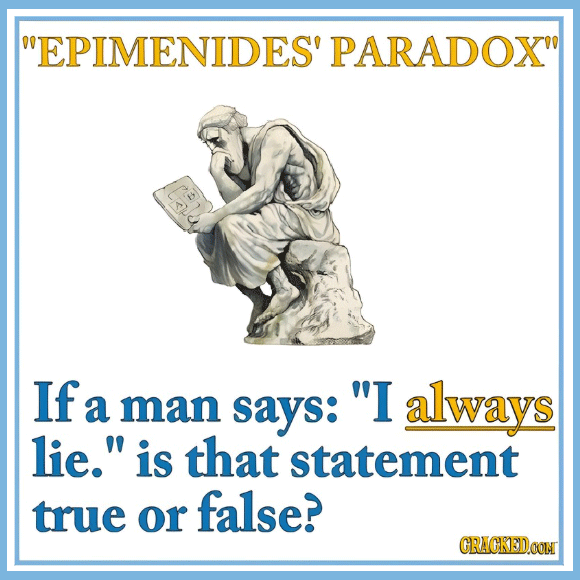
Ancient Greek philosopher Epimenides created a puzzle that goes: All Cretans are liars. Is this statement true or not? If all Cretans lie, and Epimenides is a Cretan, then his statement that all Cretans lie must be true. But if this is true, then not all Cretans are liars, creating a contradiction. Conversely, if we conclude that not all Cretans lie and his statement is false, then it must actually be true that all Cretans lie. This creates an endless loop of reasoning, with no resolution.
Another Greek philosopher, Eubulides, from the 4th century BCE, came up with an even more provocative paradox: What I am saying now is a lie. Or more simply: I am lying. If the statement is true, then it must be false, and if it is false, then it must be true, resulting in a contradiction.In addition to Epimenides and Eubulides, perhaps the most famous Greek philosopher remembered for his paradoxes is Zeno of Elea (from Mykonos), some of which remain well-known, like Achilles and the Tortoise. In this paradox, Achilles races a tortoise, giving it a 100-meter head start. If the tortoise moves ten times slower than Achilles, and Achilles halves the distance between them every 10 seconds, the tortoise continues advancing slightly with each interval. Achilles gets ever closer but theoretically never overtakes it.
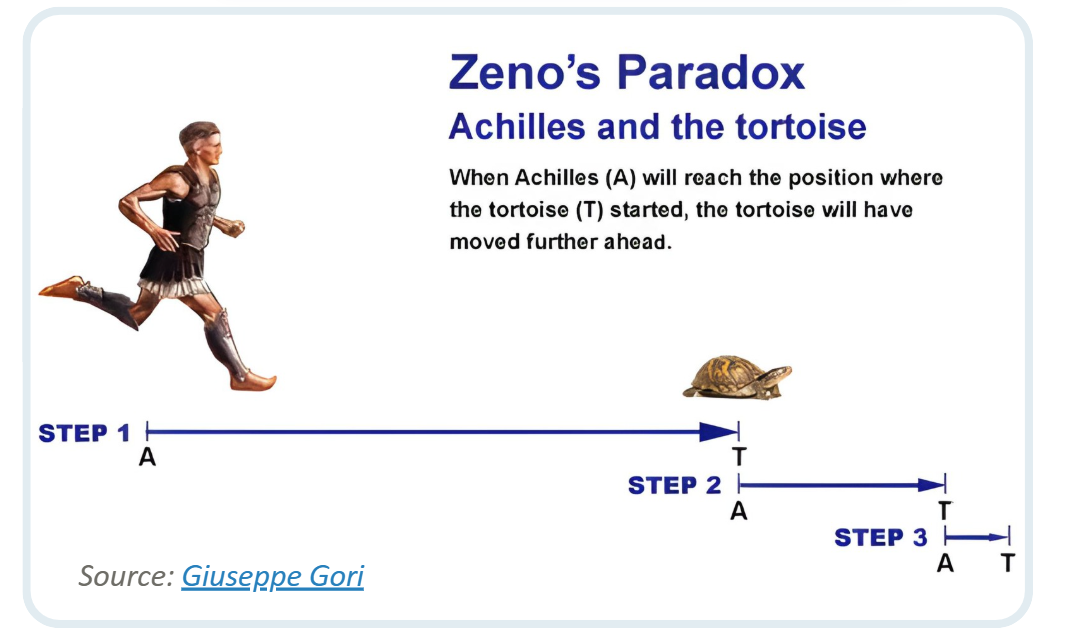
A related paradox is Zeno’s Arrow: If everything occupying a space at a given moment is stationary, and a moving object also occupies a space in any given instant, then a flying arrow must be motionless. Since it cannot be in two places at once and time is infinitely divisible, the arrow theoretically never reaches its target.
Finally, let us mention a well-known paradox that challenges modern physics: the so-called Twin Paradox.
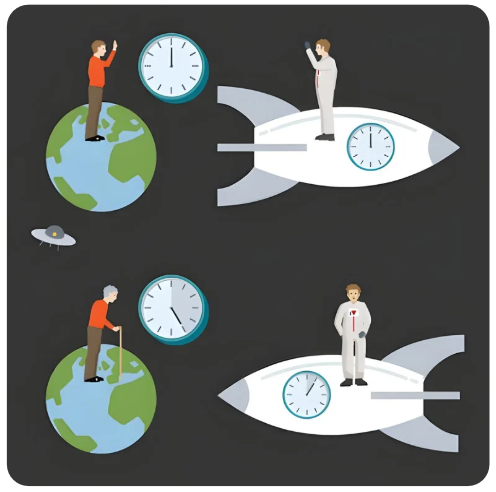 Imagine two twins, one of whom embarks on a cosmic journey aboard a spaceship while the other remains on Earth. Because time is relative, for the twin traveling in the spaceship at a speed close to the speed of light, time slows down.
Thus, when the traveling twin returns to Earth after 20 years, they will appear noticeably younger than their twin sibling. For the traveling twin, only about 10 years might have passed, while 20 years would have passed for the sibling who stayed on Earth.
As strange as it may sound, this outcome is entirely consistent with the theory of relativity!
Why Do We Fall for Logical Fallacies?
We fall prey to logical fallacies because of inherent cognitive biases and emotional influences that distort our reasoning. Cognitive biases, such as confirmation bias, lead us to favour information that aligns with our existing beliefs while ignoring evidence to the contrary, making flawed arguments appear convincing. Additionally, our reliance on mental shortcuts (heuristics) to process complex information quickly can result in oversimplifications and errors in judgement. Emotional influences, such as fear, anger, or excitement, further cloud our thinking by overriding rational analysis with impulsive reactions. Social pressures, like the desire to conform or gain approval, also play a role, making us more likely to accept popular yet flawed arguments. Furthermore, fallacies often exploit persuasive language or exploit gaps in our knowledge, making it harder to detect errors. Understanding these tendencies is essential for recognizing and resisting fallacies, enabling clearer, more rational decision-making.
- Straw Man Fallacy: Misrepresenting someone's argument to make it easier to attack.
-
Please find here the PowerPoint presentation for Lesson 12, entitled Logical Fallacies: Spotting and Avoiding Flawed Reasoning.
-
- Thou Shall Not Use Logical Fallacies – a useful website with posters, cards, information on logical fallacies.
- Your Bias Is – a website with posters, information on cognitive biases.
- PRECOBIAS – pedagogical resources: a project featuring lesson plans on critical thinking and cognitive biases.
-
Practise your knowledge about Logical Fallacies by taking this short, 10-question quiz.
-
-
-
Introduction
In a world where media is everywhere, it’s essential to know how to read media messages critically. Whether it’s the news, social media, advertisements, or entertainment, messages are designed to inform, persuade, or even manipulate. This lesson will help you develop skills to understand the motives behind media messages, recognize bias, and evaluate the reliability of information.
Objectives
By the end of this lesson, you will be able to:
- Recognize common signs of bias, manipulation, and unreliable information in media messages.
- Identify and evaluate the reliability of different media sources by analysing their purpose, language, and source credibility.
- Apply practical tools, such as fact-checking websites and reverse image searches, to verify information and assess its accuracy before sharing.
What Does It Mean to Read Media Critically?
Critical reading of media involves:
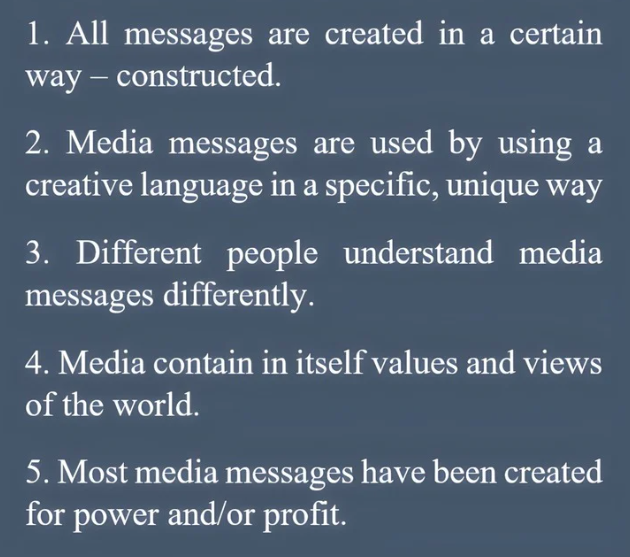
- Identifying Bias: Media messages often reflect the views and priorities of the people or organizations that created them.
- Evaluating Source Reliability: Not all media sources are equally trustworthy. Knowing which sources to trust and which to question is key.
- Recognizing Intent: Ask why the message was created. Is it trying to inform, entertain, sell, or persuade?
Understanding Bias and Agenda
All media messages have a perspective. Understanding the purpose and bias behind them helps you see the whole picture.
Activity: Compare Media Coverage
- Find two articles from different sources about the same topic, such as a recent sports event or international news.
- Analyse: Look at the words used in each article. Are there differences in tone? For example, one article might focus on positive aspects, while the other might highlight negative points.
- Discussion: Talk about how these differences might influence the reader’s opinion. What might each article's goal be?
Example: Suppose a report from a regional newspaper describes an economic policy favourably, while another criticizes it. The words they use – like “successful” vs. “problematic” – can reveal biases.
Identifying Reliable Sources
Not all sources provide accurate information. Some may exaggerate or present information to push an agenda. Knowing how to assess a source’s reliability is essential.
- Look for Authoritative Sources: Reliable sources often come from established news outlets, experts, or government organizations. In the Balkans, sources like reputable newspapers or regional fact-checking organizations, such as Faktograf (Croatia) or Raskrikavanje (Serbia), can help verify information.
- Check for Red Flags: Sensationalism, lack of clear author information, or excessive emotional language can be warning signs of unreliable content.
Activity: Practice Source Analysis
- Pick a news article from a trusted source and one from an unfamiliar website or social media.
- Evaluate: Look for the following in each article: clear author credentials, reputable sources cited, neutral language, and clear dates of publication.
- Discussion: How do these factors affect your trust in each article?
Spotting Clickbait and Manipulative Language
Clickbait uses exaggerated or misleading headlines to attract attention, often prioritizing shock value over accuracy.
Examples of Clickbait:
- “You Won't Believe What This Politician Said!”
- “This Simple Trick Will Change Your Life!”
How to Spot Clickbait:
- Exaggerated Language: Look for phrases like “shocking,” “unbelievable,” or “you’ll never guess.”
- Emotional Triggers: If the headline tries to make you feel shocked or outraged, it might be clickbait.
- Unclear or Vague Titles: Good media titles clearly state what the article is about.
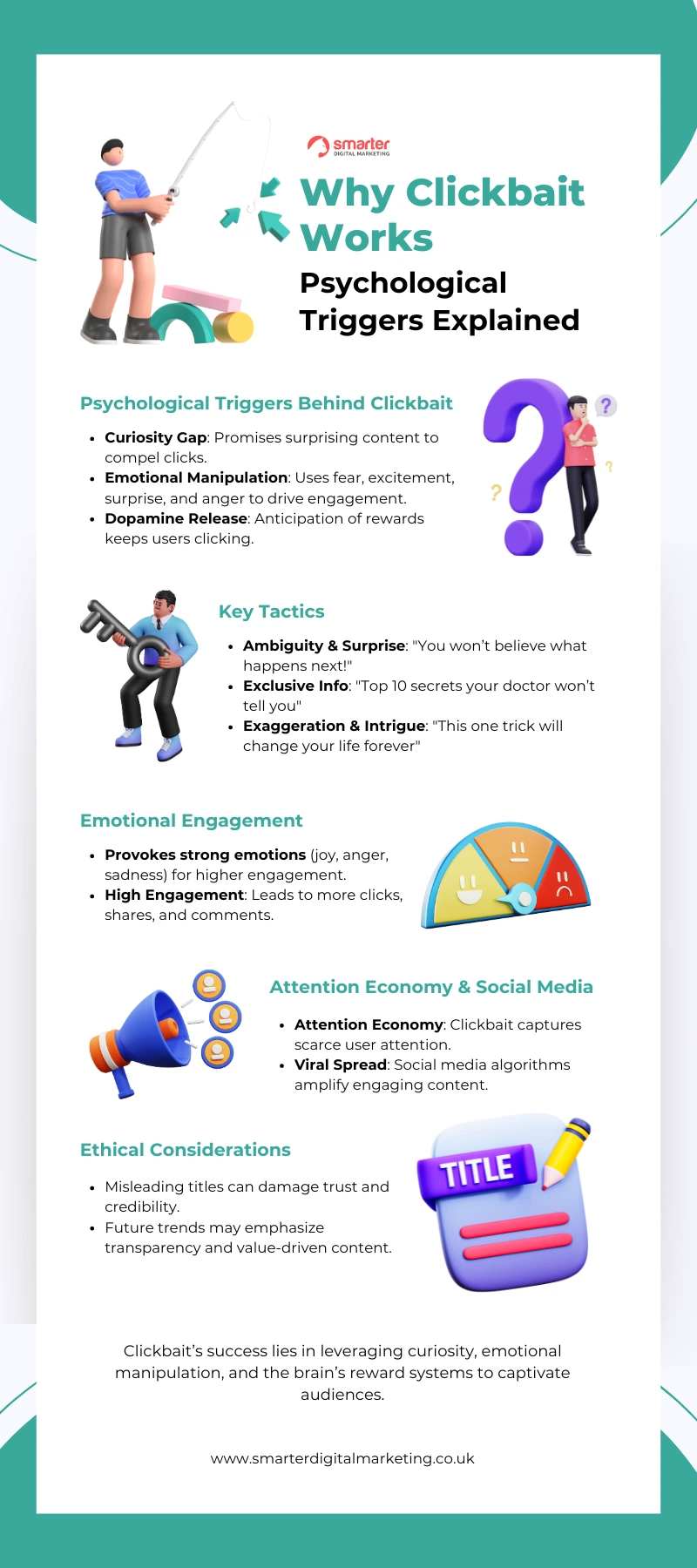
Activity: Identify Clickbait
- Look at a list of headlines and decide which ones are likely clickbait.
- Discussion: How might a clickbait headline influence someone’s perception of a topic?
Practical Tools for Critical Analysis
Here are some questions to ask when you come across any media message:
Who Created This Message? Understanding who made the content can reveal motivations and biases.
- What is the Purpose? Ask whether the goal is to inform, sell, persuade, or entertain.
- What Techniques Are Used? Consider language, visuals, and tone. Are there specific words or images that try to influence you?
- Who Benefits? Think about who might benefit from you believing or sharing this message.
- What Perspective is Missing? Media often leaves out certain perspectives. Ask yourself what viewpoints aren’t included and how that changes the message.
Application: Analysing a Real-World Example
Choose a social media post or article about a trending topic.
Analyse it by answering these questions:- Who created the content, and what might their intent be?
- What language and visuals are used to shape the message?
- What perspectives are included or excluded?
Example: Look at a post from an influencer promoting a product. Is the influencer being transparent about sponsorship? What language or images make the product seem appealing?
Checklist for Critical Media Reading
To help you in daily life, use this checklist whenever you’re reading or watching media:
- Check the source and author: Is this a reliable source?
- Identify the purpose: Is this meant to inform, entertain, sell, or persuade?
- Watch for emotional triggers: Is it trying to make you feel outraged or surprised?
- Look for missing perspectives: Is there a side of the story that’s not told?
- Verify information: Use a fact-checking website or search for additional articles on the topic.
Conclusion
Critical reading is a skill that allows you to navigate the media landscape thoughtfully and independently. By understanding the intent and perspective behind messages, you’ll be better equipped to make informed decisions and avoid manipulation.
- Recognize common signs of bias, manipulation, and unreliable information in media messages.
-
Please find here the PowerPoint presentation for Lesson 13, entitled Critically Reading Media Messages.
-
- How to Read Political News the Right Way – this article from Glamour magazine provides practical advice from experts on consuming political news critically, emphasizing the importance of cross-referencing multiple sources and recognizing emotional triggers in media.
- Reading Media Texts – closer look at media texts in general and at the key concepts that underpin all media literacy. Whenever a media product is being read, discussed, or produced, some aspects of the key concepts, (construction, text, audience and production) should be considered.
- ”Strategies for Critically Analyzing Media Messages" by Fiveable – learn to question assumptions, evaluate evidence, and consider alternative perspectives when examining media messages.
- BBC Media Literacy Strategy – a short document on how to critically analyze and evaluate media content, suitable for learners of all ages.
-
Practise your knowledge about Critically Reading Media Messages by taking this short, 10-question quiz.
-
-
-
Nowadays the people are surrounded with bunch of news, associated with a variety of topics of their interest. However, it is very important, especially for the sensitive topics, to be able to read them and understand them properly. For this purpose, it is essential for the people to have the skills to detect the accuracy and the relevance of the source and the text and to critically read and analyze the content of the article. These skills are necessary because the processing of the information is a base for the further acts of the people, especially for the issues that they are reading about.
Speaking about the critical reading, it can be defined as an “active way of reading. It is a deeper and more complex engagement with a text. Critical reading is a process of analyzing, interpreting and, sometimes, evaluating. When we read critically, we use our critical thinking skills to question both the text and our own reading of it.” (Duncan)
For this purpose, it is important to be considered how the news article is structured; which is the source that is sharing the news article; what from the shared information is relevant and confirmed and what is someone’s opinion.
Hence, this textbook is providing the brief information about the structure of the news article, the elements of the article, source relevance and evidence and the differentiation between opinions and facts.
Structure and elements of a news article
There could be a variety of structures that may be used for the development and writing of a relevant and comprehensive news article.
However, nowadays the most common and well-known structure of the news articles is the so called “inverted pyramid”. The inverted pyramid structure presents the composition of the news from most to least important information (see University of Hull 2024; Telg & Lundy 2015.)This structure is mostly used in order to firstly grab the attention and focus of the reader and to continuously provide the additional information that will clarify the entire text of the news.
The inverted pyramid structure of the news is explained as following:
- It begins with the main paragraph which is well known as lead or lede. This paragraph is short and includes the most important information about the news and the main point of the story;
- The next one is the secondary information. This information includes further description of the lead paragraph with additional statistics and other relevant data;
- The following part of the pyramid is containing the background information. Here are encompassed all the things and events that are leading to the main point/event of the news;
- As a last part is the additional information. These are all the information that are supporting the main story and were not previously explained.
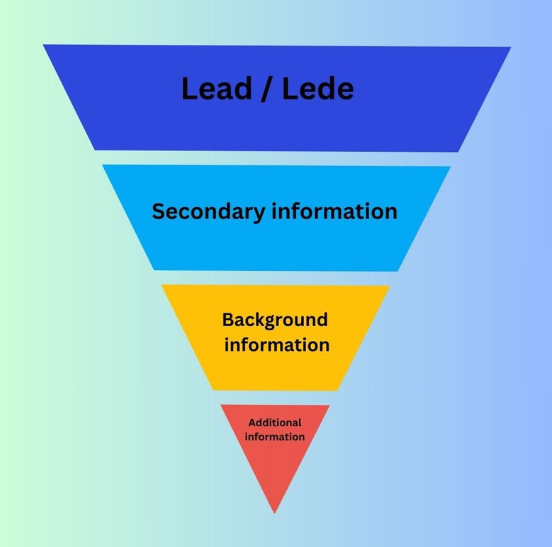
All of the abovementioned parts of the inverted pyramid also contain a few elements that they have to give an answer too.
Namely, this structure for news writing has to answer to the “five Ws and one H” (see News Writing Fundamentals).
These are actually different question words through which the news article has to provide the answers that will give the comprehensive information regarding the topic/event.
More precisely, the news article has to give the answers to:Who? What? When? Where? Why? and How?
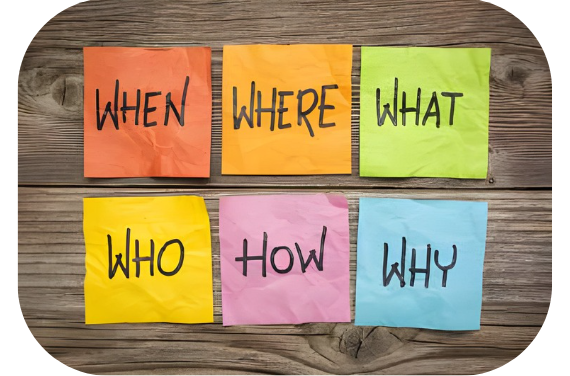 Some of the authors who work on these issues consider that in the lead part of the pyramid there has to be offered the most important information regarding the article and to be followed with the secondary information.
All in all, the news article, in order to be relevant has to follow the specific structure of presenting the information by emphasizing the most important information at the beginning and to be added all relevant sources that should follow. These facts that follow are very important and contribute to the critical reading of the readers, by offering them the facts that will serve them for further consideration of the data presented in the news article.
Evaluating sources and evidence
Fake news become more frequent nowadays and there is a necessity for the critical reading in order to avoid the share of such information broader or to act according to it. Therefore, being able to detect the relevant sources of evidence is crucial.
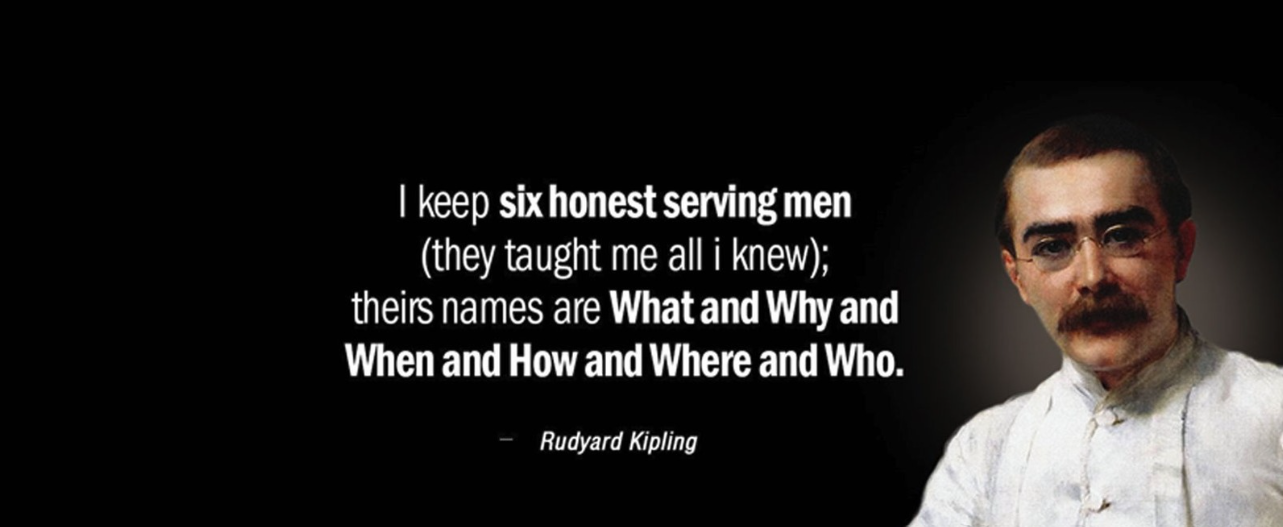
One of the ways how to detect and evaluate the real source and evidence is the SIFT mechanism, created by Mike Caufield (see: Evaluating News Resources).

By following the SIFT the purpose is that the reader is enabled to reconsider the source from where he/she is getting the information; to consider how much the source is relevant and could the reader trust the source or not; to be able to search for other sources that cover the same news and to analyze how much the presented information corelates with the real setting and the accuracy of the original data.
Differentiating between news and opinion
From the above-mentioned structure of the news article and the interpretation of the evidence it is visible that when we speak about the difference between the news and opinion we actually make a differentiation between facts and opinion.
The news is based on the facts that could be checked and verified as true, which is not the case with the opinion. The opinions are defined as personal stances, views and judgements of the author who is writing the certain text regarding the issue that is elaborated within the text. Related to the news, they are considered as factual because their evidence has the proven data that “[…] answer the questions of who, what, where, when, why and how […]”(see Izen 2021)
The differentiation between the news (facts) and opinion is essential for building the critical reading and helps the readers to better understand the real context of the issues they are reading about. Additionally, this differentiation helps the reader to reconsider the exposed opinions and not to take them as an absolute truth.
- It begins with the main paragraph which is well known as lead or lede. This paragraph is short and includes the most important information about the news and the main point of the story;
-
Please find here the PowerPoint presentation for Lesson 14, entitled Analyzing News Articles: Critical Reading in the Information Age.
-
-
Practise your knowledge about Analysing News Articles by taking this short, 10-question quiz.

-
-
-
News reporting varies significantly across the world, shaped by political, cultural and economic contexts. Understanding these differences is crucial for gaining a good perspective on global events. We will explore how news is reported differently across countries, the impact of political and cultural environments on journalism and the influence of international news agencies. The goal is to equip readers with the tools to critically evaluate news from a global perspective.
Comparative Analysis of News in Different Countries
News organizations in different countries operate under diverse frameworks, which influence the way events are being reported. These frameworks include regulatory environments, press freedom levels and journalistic standards.
United States
The U.S. has a highly competitive media landscape with a strong tradition of investigative journalism and press freedom. However, the rise of partisan news outlets like Fox News and MSNBC has contributed to a polarized media environment.
United Kingdom
The British media is known for a mix of public service and commercial outlets. The BBC, funded by the public, is recognized for its neutral and in-depth reporting. In contrast, tabloids like The Sun are known for sensationalist stories.
China
In China, the media landscape is heavily controlled by the government. State-run outlets such as Xinhua News Agency and China Daily present information that aligns with government policies and independent journalism is tightly restricted.
Russia
Russian media is also dominated by state-controlled outlets like RT (Russia Today) and Sputnik. These outlets often reflect the government's perspective, and opposition media faces censorship.
India
The Indian media is diverse, with thousands of news outlets serving a population of over 1.4 billion. While press freedom exists, political and corporate interests have a significant influence, leading to concerns over biased reporting in outlets like Times of India and NDTV.
Comparing these media environments highlights the difference of news reporting across the globe. While some countries enjoy press freedom, others struggle with censorship and political control, which can change the narrative of global events.
Impact of Political and Cultural Contexts on News Reporting
Political and cultural contexts shape not only what is reported but how it is reported. Journalists around the world must navigate different levels of government interference, public expectations and cultural norms.
Government control and censorship
In countries with authoritarian regimes, such as North Korea or Saudi Arabia, news is tightly controlled by the government. Journalists face severe restrictions and critical views are suppressed. In contrast, democracies like those in Western Europe often have strong protections for press freedom, though political and corporate influences can still change the coverage of information.
For instance, organizations like Reporters Without Borders track press freedom globally, providing annual Press Freedom Index rankings that highlight countries where journalism is most restricted or where it thrives.
Cultural norms and values
Cultural factors play a significant role in shaping the focus and tone of news reporting. For example, Western news outlets often emphasize individual freedoms and human rights, while news in many Asian countries may prioritize collective well-being and national stability. In Japan, media outlets like NHK World are known for their measured and restrained reporting, reflecting broader cultural values of harmony and social responsibility.Similarly, in many African countries, local news agencies emphasize community-based reporting and focus on developmental issues such as education, health and infrastructure, reflecting the immediate concerns of their societies.
International news agencies and their influenceInternational news agencies play a critical role in shaping the global flow of information. These agencies often set the agenda for what is reported in smaller countries and local news outlets.
One of the largest international news agencies, Reuters is headquartered in the UK and has a reputation for objective and neutral reporting. Its global reach means that many smaller news organizations rely on Reuters for international coverage.
Associated Press (AP)
The AP is a U.S.-based news agency that provides news to outlets worldwide. It operates on a cooperative model, allowing its content to be syndicated across thousands of media outlets. Its influence on global news is significant, as it often serves as the primary source of international news for smaller organizations.
L’Agence France-Presse (AFP)
AFP is a French news agency with a strong presence in Europe and Africa. Known for its multilingual reporting, AFP covers global events from a distinctly European perspective, often focusing on issues of human rights, conflict and environmental change.
Al Jazeera
Based in Qatar, Al Jazeera has become a major player in international news, particularly in the Middle East. Its coverage often challenges Western narratives, providing a different viewpoint on global conflicts especially in the Arab world.
These agencies have a profound influence on global news narratives. Smaller or less resourced outlets often republish content from these agencies, meaning that the way news is framed by organizations like Reuters or AP can shape public perception worldwide.
News reporting around the world is influenced by a variety of factors, including political, cultural and economic context. A comparative analysis reveals significant differences in how news is framed, while international news agencies make a powerful influence on the global media. By understanding these dynamics, us, readers, can better appreciate the diversity of news perspectives and critically engage with global reporting.
-
Please find here the PowerPoint presentation for Lesson 15, entitled Global Perspectives on News.
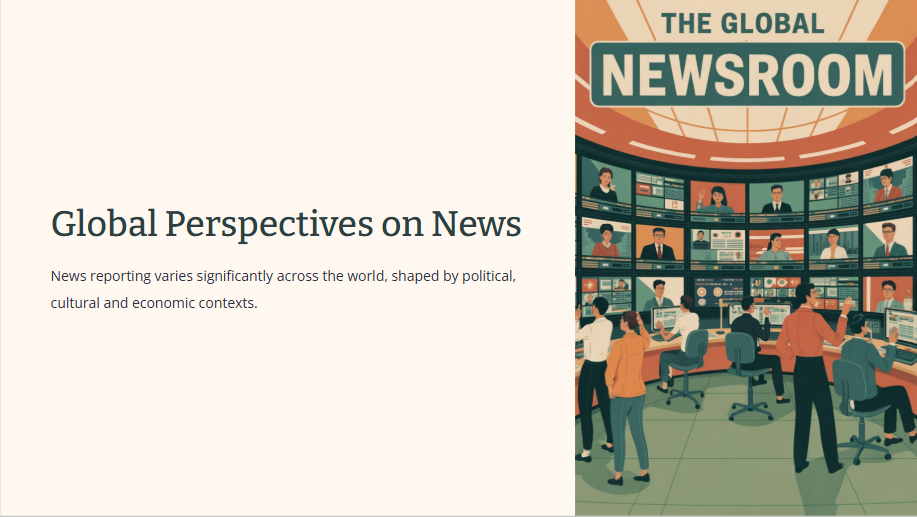
-
- World Press Freedom Index – published by Reporters Without Borders, this index compares the level of press freedom enjoyed by journalists in 180 countries and territories, providing a comprehensive overview of global press freedom.
- The Evolution and Impact of News Agencies on Global Journalism – this piece discusses the role of international news agencies in shaping global journalism, emphasizing their influence on news dissemination and content.
- Exploring the Evolution and Role of News Agencies – this blog explores the history, functions, and importance of news agencies in modern mass communication.
-
Practise your knowledge about Global Perspective on News by taking this short, 10-question quiz.
-