Lesson 8. AI Generated Pictures & Videos
Section outline
-
-
Introduction
In recent years, artificial intelligence (AI) has made huge progress in the field of visual content creation. AI-generated images and videos have become increasingly sophisticated, blurring the lines between human-created and machine-created content. To date, some AI created images have won a major photo competition, fake political AI video shared by Elon Musk got over 130 million views etc, AI can be created in someone’s voice such as Scarlet Johansson or even videos to scam people like Elon Musk’s case. This lesson explores the process behind AI image and video generation, notable examples of this technology in action, and methods for distinguishing between authentic and AI-generated content.
Notable cases of AI generated visual media
Here are four notable cases of fake AI images and videos, along with links to articles discussing them:
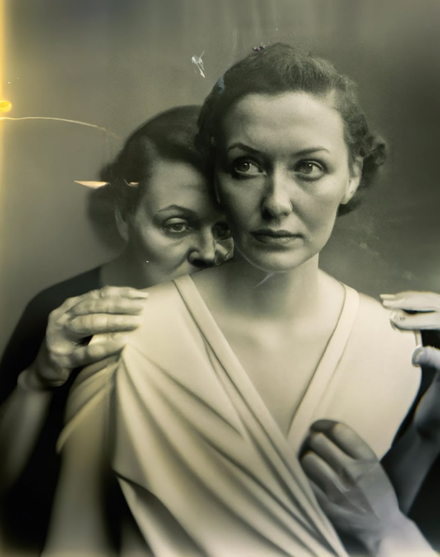
AI generated image “Pseudomnesia: The Electrician”
won the Sony World Photography Competition- The Tom Cruise DeepFake TikTok Videos (2021)
A series of videos appeared on TikTok featuring a hyper-realistic deepfake of actor Tom Cruise. These videos showcased the advanced state of deepfake technology and raised concerns about the potential for misuse. - The "This Person Does Not Exist" Website
While not a specific case, this website generates a new AI-created face every time you refresh the page, demonstrating how AI can create highly realistic images of people who don't actually exist. - AI-Generated Art Wins Competition (2022)
An AI-generated artwork won first place in a fine arts competition at the Colorado State Fair, sparking debate about the nature of art and creativity in the age of AI. - Fake Kamala Harris campaign video (2024)
In mid-2024, a fake, AI made allegedly campaign video of the USA presidential election candidate Kamala Harris appeared, attracting 130 million views only from Elon Musk’s posting it without clearly stating that it is a fake.
These cases demonstrate the wide-ranging impact of AI-generated images and videos across various fields, from entertainment and art to journalism and politics. They underscore the importance of developing robust methods for detecting AI-generated content and considering the ethical implications of this technology. They also demonstrate the potential for such technology to be used for misinformation or manipulation in political discourse.
Debunking AI-Generated Content
As AI-generated content becomes more prevalent, it’s crucial to develop skills for identifying synthetic media. Here are some elements that you should check:
- Inconsistencies in Details:
- Look for irregularities in facial features, such as asymmetrical eyes or oddly shaped teeth.
- Check for inconsistencies in backgrounds or lighting that don't follow natural physics.
- Analyzing Metadata:
- Examine the image or video file’s metadata for information about its origin and editing history.
- Examine the image or video file’s metadata for information about its origin and editing history.
- Digital Forensics Tools:
- Use specialized software designed to detect manipulated or AI-generated content.
- Contextual Analysis:
- Consider the source and context of the content. Is it from a reputable source? Does it align with known facts?
- AI Detection Models:
- Employ AI-powered tools specifically trained to identify AI-generated content.
- Employ AI-powered tools specifically trained to identify AI-generated content.
Online Sources for Verification
Several online resources can help in verifying the authenticity of images and videos:
- TinEye: A reverse image search engine that can help find the original source of an image.
- Google Reverse Image Search: similar to TinEye, it can trace the origin and usage of images across the web.
- FotoForensics: Provides tools for analyzing the digital makeup of images to detect alterations.
- InVID Verification Plugin: A browser extension that offers various tools for verifying videos and images.
- Sensity: Specializes in deepfake detection and provides resources for identifying AI-generated videos.
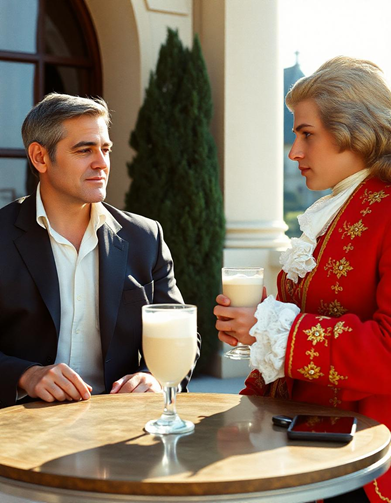 Illustration
Photo below is an AI created image of Gorge Clooney and Wolfgang Amadeus Mozart allegedly drinking vanilla milkshake together at Schönbrunn Palace in Vienna. Below is also a link to a fake YouTube video about the same “event”. Both are AI created content for educational purposes to serve as an illustration of AI creative abilities. Clooney and Mozart of course never met as Mozart (1757-1791) died 170 years before Clooney was born (1961)!
Notable AI tools
- DALL-E 2 by OpenAI is known for creating highly detailed and creative images from text descriptions.
- Midjourney has gained popularity for its artistic renderings and ability to create images in various styles.
- Stable Diffusion - an open-source model that has democratized AI image generation.
- This Person Does Not Exist - A website showcasing AI-generated faces that are indistinguishable from real photographs.
- DeepFake Videos - While there isn't a single source, the term "deepfake" has become widely known. A famous example is the deepfake video of Tom Cruise on TikTok. Here-s an article about the Tom Cruise deepfake.
Remember, the field of AI-generated content is rapidly evolving, so new and more advanced examples are continually emerging. It's always a good idea to check the most recent sources for the latest developments in this field.
Ethical Considerations and Future Implications
The rise of AI-generated content raises important ethical questions:
- Copyright and Ownership: Who owns the rights to AI-generated content?
- Misinformation: How can we prevent the spread of fake news and manipulated media?
- Privacy Concerns: What are the implications of creating realistic images or videos of real people without their consent?
- Creative Industry Impact: How will AI-generated content affect artists, photographers, and other creative professionals?
As technology continues to advance, it’s likely that AI-generated content will become even more sophisticated and widespread. This underscores the importance of developing critical thinking skills and leveraging technological tools to navigate the increasingly complex digital landscape.Conclusion
AI-generated images and videos represent a fascinating intersection of technology and creativity. While they offer exciting possibilities for art, entertainment, and innovation, they also present challenges in terms of authenticity and ethical use. By understanding how this content is created and learning to critically evaluate digital media, we can better appreciate the capabilities of AI while remaining vigilant against potential misuse.
- The Tom Cruise DeepFake TikTok Videos (2021)
-
Please find here the PowerPoint presentation for Lesson 8, entitled AI-Generated Images and Videos.
-
Several online resources can help in verifying the authenticity of images and videos:
- TinEye – a reverse image search engine that can help find the original source of an image.
- Google Reverse Image Search – similar to TinEye, it can trace the origin and usage of images across the web.
- FotoForensics – a reverse image search engine that can help find the original source of an image.
- Sensity– specializes in deepfake detection and provides resources for identifying AI-generated videos.
-
Practise your knowledge about AI fake images and videos by taking this short, 10 questions quiz.
-